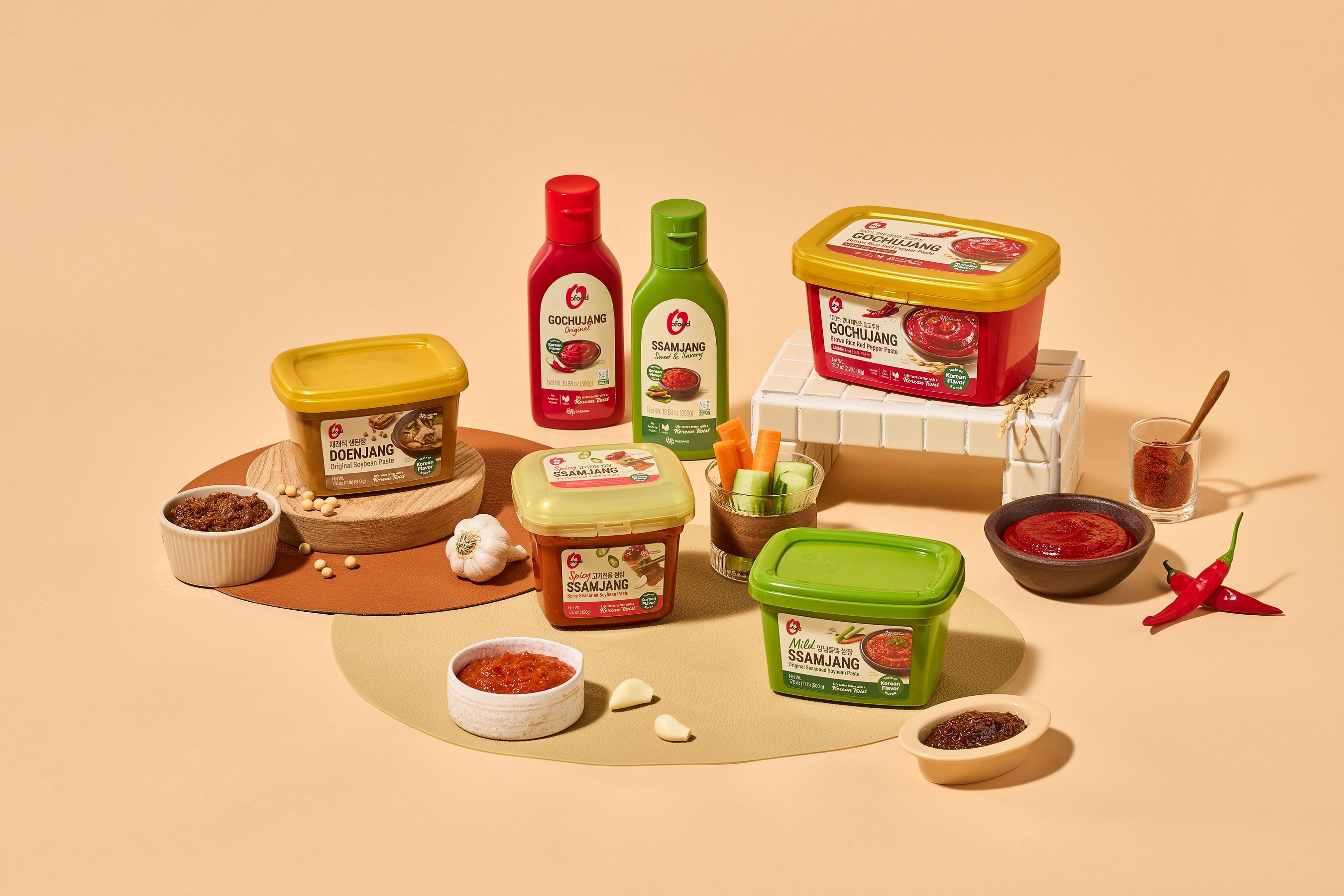
South Korea's Daesang Corporation is accelerating a structured U.S. retail push for its global food brand Ofood, bringing a locally adapted Korean sauce portfolio into mainstream channels — including Walmart — backed by 70 years of fermentation manufacturing and a product roster now spanning roughly 480 SKUs exported to approximately 60 countries.
The move is less about novelty and more about category maturation. Gochujang has cleared the "specialty aisle" ceiling and is moving toward the condiment mainstream, driven by sustained North American interest in Korean cuisine. Daesang's response is deliberate: designate sauces as one of four core global categories — alongside kimchi, gim, and convenience foods — and engineer products to fit Western usage occasions rather than simply export formats built for Korean kitchens.
The Numbers
Daesang's Natural Gochujang tube sauce ranks as the company's top sauce export, with 2025 sales up approximately 84.0% year over year. That growth rate, on a product already in major retail, is the kind of velocity that gets category buyers at regional grocery chains and national mass retailers to return calls. The tube format — thinner consistency, milder fermented aroma, drizzle-ready — is a deliberate friction-reduction play: the same core ferment, engineered for tacos, salads, and spring rolls, not just bibimbap.
The broader lineup reinforces the cross-application strategy. Gochujang Tteokbokki Hot Sauce is positioned for pasta and gnocchi as readily as for Korean street food. All Purpose Korean BBQ Sauce, built on a soy-gochujang base, covers marinades, stir-fry, and dipping in a single SKU. Mayo Gochujang targets burger and fry applications directly — a clear signal that Daesang is pitching for real estate on the condiment rack, not the international foods endcap.
What This Signals for Operators
For foodservice operators and grocery buyers, the strategic read here is format and channel, not just flavor trend. Daesang is not waiting for consumers to seek out Korean ingredients — it is repositioning fermented sauce technology as a mainstream condiment infrastructure play. That approach mirrors how sriracha scaled two decades ago: authentic origin, simplified format, and placement alongside familiar applications until the product became a default rather than a destination.
Eun-young Park, Head of Daesang's Food Business Unit, framed it plainly: the goal is to introduce Ofood products that preserve authentic Korean flavors while reflecting the tastes and food culture of each market. That is a localization mandate, not a brand-tourism pitch — and it has procurement implications for distributors and retail buyers evaluating the Korean sauce category for regional or national expansion.
For operators watching emerging condiment and sauce trends or building retail-ready brand strategies, Daesang's Ofood entry into mass retail is a reference case worth benchmarking. A 70-year fermentation manufacturer with active Walmart distribution and near-triple-digit export growth is not a test-and-learn story — it is a category signal.
Written by Michael Politz, Author of Guide to Restaurant Success: The Proven Process for Starting Any Restaurant Business From Scratch to Success (ISBN: 978-1-119-66896-1), Founder of Food & Beverage Magazine, the leading online magazine and resource in the industry. Designer of the Bluetooth logo and recognized in Entrepreneur Magazine's "Top 40 Under 40" for founding American Wholesale Floral, Politz is also the Co-founder of the Proof Awards and the CPG Awards and a partner in numerous consumer brands across the food and beverage sector.