The Play
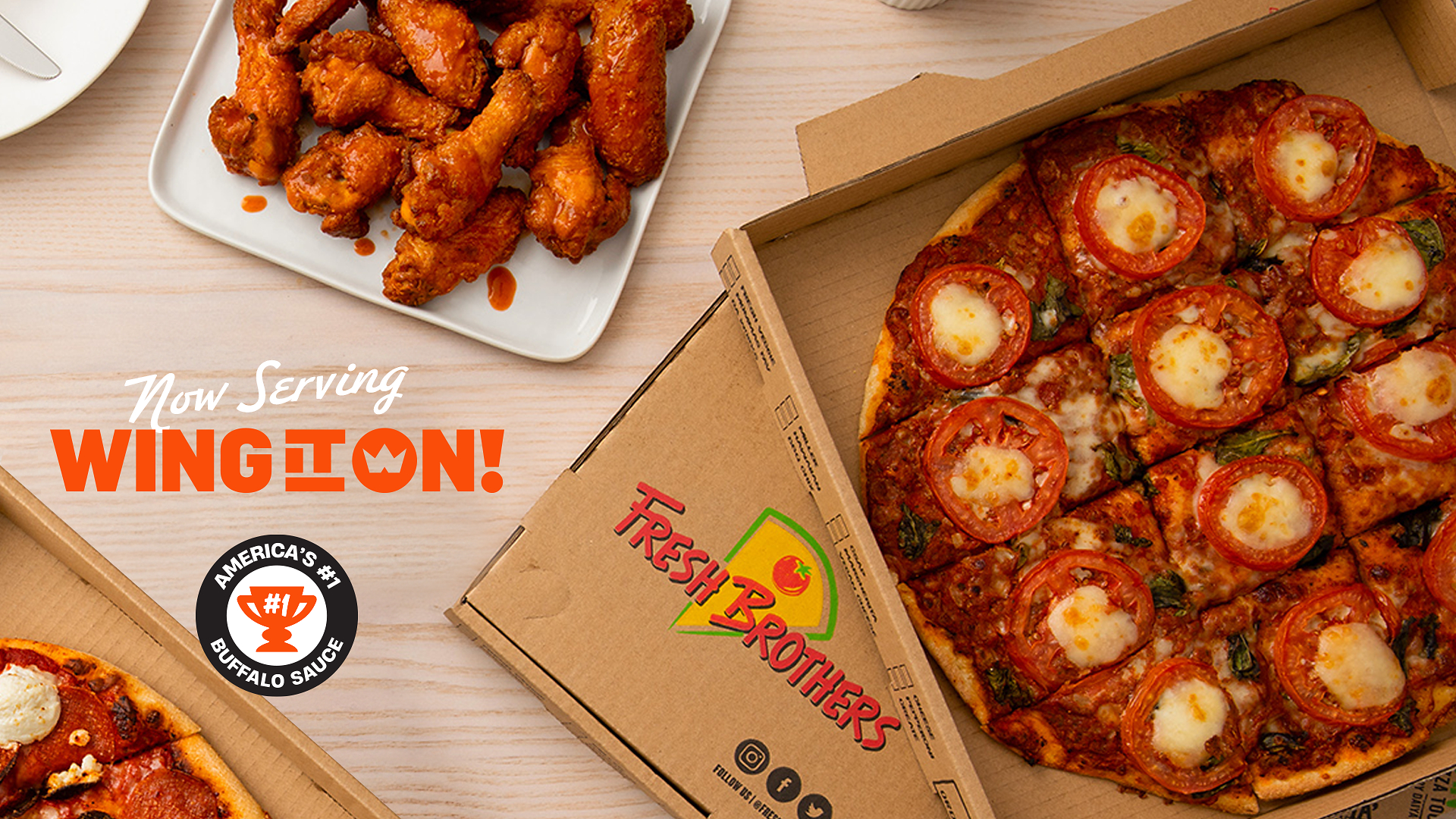
Craveworthy Brands added 20 points of distribution to Wing It On! overnight — not through franchise deals or new construction, but by activating the brand inside every Fresh Brothers Pizza location across Los Angeles, Orange County, and San Diego. The co-brand launch, live as of August 24, gives Wing It On! its first West Coast presence and brings its full competition wing menu — bone-in wings, boneless bites, five sauces, two dry rubs, and house-made dips — into a concept it already owns.
For multi-unit operators running more than one concept under a shared infrastructure, the move is worth a close read. Craveworthy, which operates more than 20 brands across 300-plus U.S. and international locations, avoided the typical expansion calculus: site selection, lease negotiation, construction timelines, and grand-opening spend. Instead, it leveraged existing kitchen footprint, an established customer base, and shared back-of-house operations to push a second brand into a new regional market in a single motion.
Why the Model Works
Co-branding inside a controlled portfolio is not new — ghost kitchen operators have run this playbook for years — but Craveworthy's version carries a structural advantage most virtual-brand experiments lack: both concepts are full, independently operated brands with distinct identities, competitive track records, and loyal customer bases. Wing It On! enters Southern California having earned nine awards across four consecutive National Buffalo Wing Festivals, competing in categories from medium traditional to extra-hot. Fresh Brothers, founded in Los Angeles in 2008, has built nearly two decades of regional loyalty around daily-made dough and clean-ingredient sourcing.
Gregg Majewski, CEO and founder of Craveworthy, framed the logic plainly: the Fresh Brothers customer base was already there, and Wing It On! had already proven it could compete nationally. Layering a proven wing brand onto a trusted pizza platform reduces the consumer education burden that typically slows new market entry. Matt Ensero, co-founder of Wing It On!, noted that wings are never treated as an afterthought within the brand's operating standards — a positioning point that matters when the concept is being introduced through another brand's dining room.
Signals for Operators
For operators watching multi-brand platform strategy, a few dynamics here are worth tracking. First, the capital efficiency of internal co-branding is increasingly attractive as real estate costs and construction timelines compress margin on new-unit development. Second, complementary daypart and occasion overlap — pizza and wings both index heavily toward game-day and group ordering — reduces the menu integration risk that sinks poorly matched co-brands. Third, the timing against football season and the National Buffalo Wing Festival (August 29–30 in Buffalo) shows deliberate calendar alignment, generating earned media and trial at the same moment the concept needs to establish regional credibility.
Josh Halpern, chief business officer at Craveworthy, described the move as an example of brands within the portfolio making each other stronger. That framing points toward a broader growth thesis: for a multi-brand franchisor, the existing location network is itself a distribution asset, not just a real estate portfolio.
Operators evaluating their own brand architecture — whether managing two concepts, considering a virtual brand, or advising a supplier on foodservice channel strategy — should note that the ceiling on this model is largely determined by kitchen capacity, menu compatibility, and operational complexity, not by lease availability or build-out capital. For the right pairing, the math changes significantly.
Craveworthy's execution here also offers a template for brand launch strategy in foodservice that sidesteps the traditional franchise ramp — relevant context for any operator or brand evaluating multi-unit expansion without new construction.
Written by Michael Politz, Author of Guide to Restaurant Success: The Proven Process for Starting Any Restaurant Business From Scratch to Success (ISBN: 978-1-119-66896-1), Founder of Food & Beverage Magazine, the leading online magazine and resource in the industry. Designer of the Bluetooth logo and recognized in Entrepreneur Magazine's "Top 40 Under 40" for founding American Wholesale Floral, Politz is also the Co-founder of the Proof Awards and the CPG Awards and a partner in numerous consumer brands across the food and beverage sector.