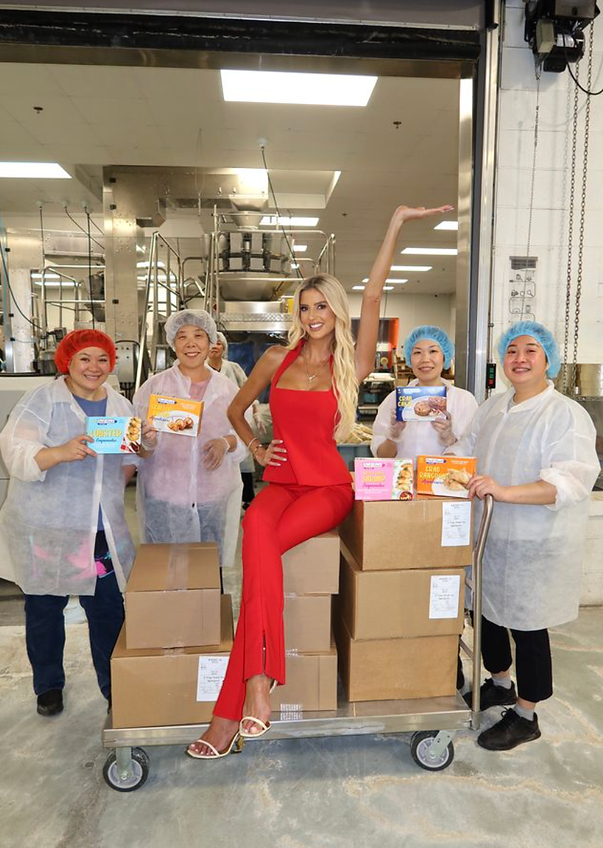
Three new SKUs from Coast to Coast Kitchen hit Target shelves nationwide this month, deepening a retail partnership that has already moved millions of dollars in product and pulled nearly 100,000 shoppers into the frozen seafood category since the brand's initial Target debut in February 2026. The additions — a Lobster Empanada, Sweet Chili Shrimp Empanada, and Crab Rangoon — were developed exclusively for the retailer, a meaningful signal for buyers and brokers tracking how emerging frozen-appetizer brands negotiate exclusive SKU agreements with mass-channel partners.
The Numbers
The February launch data gives category managers something concrete to work with. Of the roughly 100,000 new-to-category buyers Coast to Coast Kitchen attracted, 80.0% were Millennials — a demographic that drives frozen-appetizer velocity but remains underpenetrated in the premium seafood segment. Equally notable: 40.0% of new-to-category transactions included three or more units, a basket-building rate that justifies the expanded footprint. For brands pitching to retail buyers and distribution partners, those two numbers — demographic acquisition and multi-unit pull-through — are exactly the metrics that unlock incremental shelf space.
Manufacturing Leverage
Founder and CEO Emma Hernan operates two production facilities outside Boston, capitalized at $5.5 million and $7.5 million respectively, employing more than 100 people. Owning the manufacturing stack — rather than co-manufacturing — gives Coast to Coast Kitchen margin control and production flexibility that most early-stage branded frozen brands cannot match. That infrastructure also matters in retail negotiations: a buyer granting a nationwide, Alaska-and-Hawaii-inclusive launch needs confidence that supply chain execution won't create out-of-stocks. Vertically integrated production is a credible answer to that concern.
What Operators and Vendors Should Watch
The empanada format is doing double duty here. It is simultaneously the brand's heritage SKU and its category-crossover vehicle — bridging Latin-inspired comfort food with premium seafood in a frozen handheld. That positioning sits in a white space most frozen-seafood incumbents have not addressed. For foodservice operators and hospitality procurement teams sourcing frozen appetizers for banquet, catering, or hotel F&B programs, the Coast to Coast Kitchen assortment — which now spans New England Crab Cakes, Bacon Scallops, Shrimp Spring Rolls, Crab Minis, and the three new empanada-adjacent items — represents a fuller program from a single vendor rather than a single-hero SKU.
For agencies and brand consultants working the brand launch and retail readiness space, the exclusive-SKU strategy is worth studying. Developing retailer-exclusive flavors compresses the path from pilot to expanded distribution by giving the retail partner a proprietary reason to promote. It also generates earned media — this launch carries a founder narrative, a regional flavor story (Massachusetts lobster, California chili shrimp), and a family-legacy hook — all of which reduce paid media dependency in the early retail window. Food & Beverage Magazine has tracked this exclusive-SKU playbook across multiple emerging CPG categories; it consistently outperforms generic line extensions in Year 1 velocity data.
Written by Michael Politz, Author of Guide to Restaurant Success: The Proven Process for Starting Any Restaurant Business From Scratch to Success (ISBN: 978-1-119-66896-1), Founder of Food & Beverage Magazine, the leading online magazine and resource in the industry. Designer of the Bluetooth logo and recognized in Entrepreneur Magazine's "Top 40 Under 40" for founding American Wholesale Floral, Politz is also the Co-founder of the Proof Awards and the CPG Awards and a partner in numerous consumer brands across the food and beverage sector.