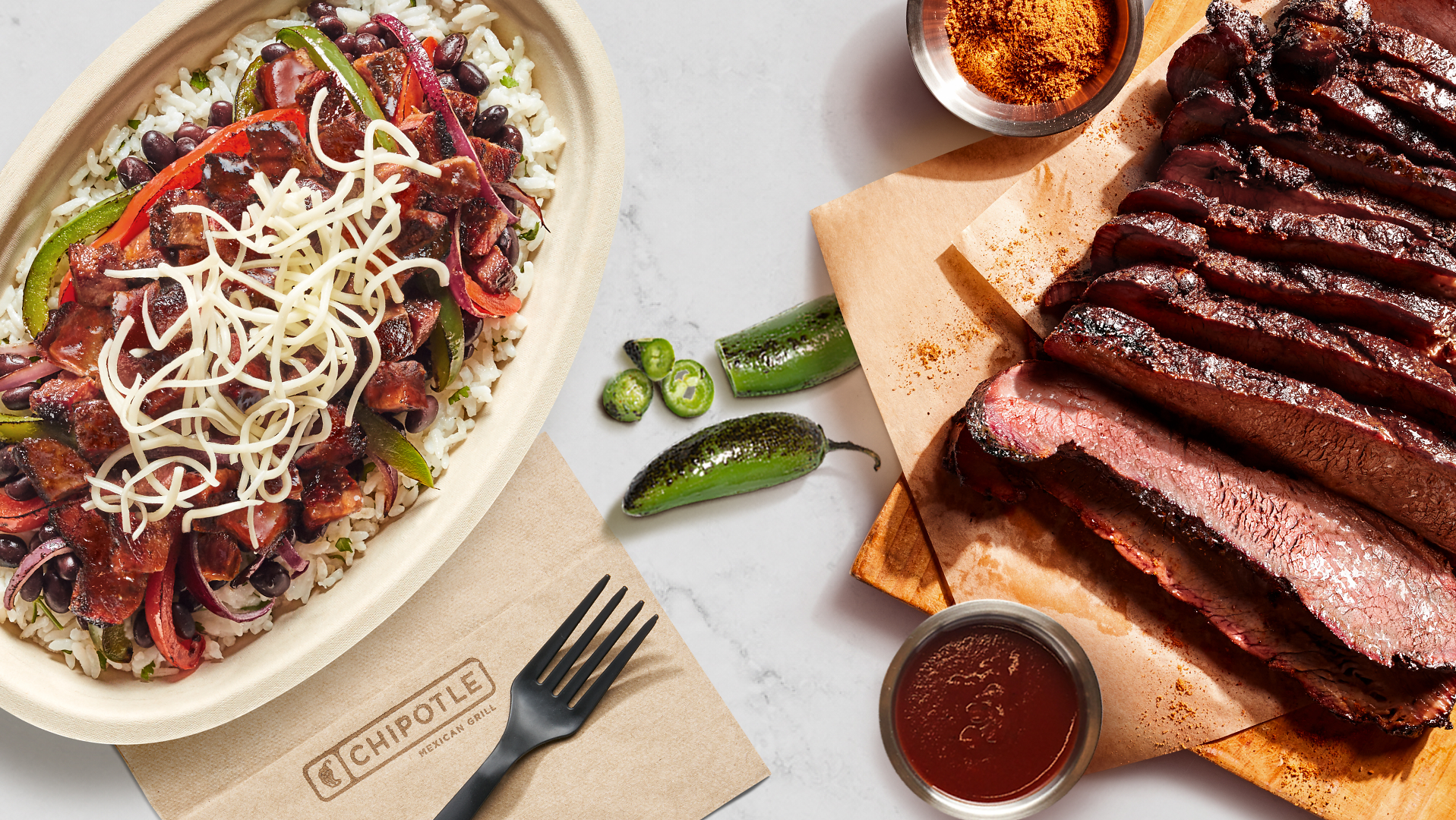
Chipotle Mexican Grill (NYSE: CMG) is returning Smoked Brisket to its U.S. and Canada menus on November 5 for a limited run timed to football season — a protein that has sold out ahead of schedule in previous appearances. The relaunch pairs culinary storytelling with a measurable digital incentive: $0 delivery fees on app, Chipotle.com, and Chipotle.ca orders placed through November 18 on any Smoked Brisket entrée. For operators watching how a 4,200-unit chain engineers urgency, this LTO cycle is worth dissecting.
The Sourcing Standard
The supply-side story is as instructive as the marketing one. Chipotle estimates that roughly 5% of U.S. beef meets its Responsibly Raised® specifications — cattle raised on a vegetarian diet, without added growth hormones or routine antibiotics, with ranch-level traceability. That constraint is both a quality claim and a scarcity signal: the chain isn't choosing to run this protein year-round, it genuinely can't source it at scale indefinitely. Operators navigating premium-protein procurement will recognize this dynamic. Building a menu story around a tightly sourced ingredient creates authentic urgency without manufactured hype. Once in restaurants, team members sear the pre-smoked brisket on the plancha, finish it with spices, and hand-chop it in small batches throughout the day — a labor-forward prep model that reinforces the "craft" positioning.
Creator Kitchen as Campaign Architecture
The broader campaign framework deserves attention from anyone allocating influencer or content budgets. Building on a "100 Creators" national ad campaign launched in August — developed with agency partner KIDS — Chipotle invited food creators Max Greb (Max the Meat Guy) and Newton Nguyen (Newt), alongside reality personality Carl Schmidt, directly into restaurant kitchens to capture the brisket prep process from their own perspectives. The result is content that is simultaneously authentic to the creator's voice and operationally grounded in what actually happens behind the line. That's a meaningful evolution from the standard "product shot + discount code" influencer brief. For brands and operators exploring influencer coordination and brand launch strategy, this kitchen-access model transfers well beyond QSR — it's applicable to hotel F&B activations, emerging CPG brands, and specialty food retailers looking to differentiate on process transparency.
The delivery fee waiver running concurrently is a clean, time-bounded call to action layered on top of the earned media. Rather than a blanket discount, it requires a specific entrée purchase, ties directly to Chipotle's owned digital channels (explicitly excluding third-party platforms), and carries a hard end date. That structure protects margin on delivery economics while steering customers away from marketplace aggregators — a priority for any operator trying to build a direct digital relationship with guests. The $10 USD minimum order floor and category-specific requirement also help filter for higher-intent buyers.
What Operators Should Take Away
For independent operators and regional chains, the Chipotle playbook here isn't about scale — it's about structure. A limited-time protein tied to a cultural moment (football season), supported by sourcing credibility, activated through creator content, and amplified by a channel-specific incentive is a repeatable framework at any size. The key variables are the authenticity of the sourcing story, the specificity of the digital promotion, and the willingness to actually let the item sell out rather than extend it indefinitely. Scarcity only works as a growth lever when it's real. Operators interested in how digital campaign mechanics and geo-targeted promotions can amplify LTO periods should note that Chipotle's delivery window (two weeks, owned channels only) is narrow by design — it concentrates order behavior rather than diffusing it across a prolonged discount period.
Written by Michael Politz, Author of Guide to Restaurant Success: The Proven Process for Starting Any Restaurant Business From Scratch to Success (ISBN: 978-1-119-66896-1), Founder of Food & Beverage Magazine, the leading online magazine and resource in the industry. Designer of the Bluetooth logo and recognized in Entrepreneur Magazine's "Top 40 Under 40" for founding American Wholesale Floral, Politz is also the Co-founder of the Proof Awards and the CPG Awards and a partner in numerous consumer brands across the food and beverage sector.