
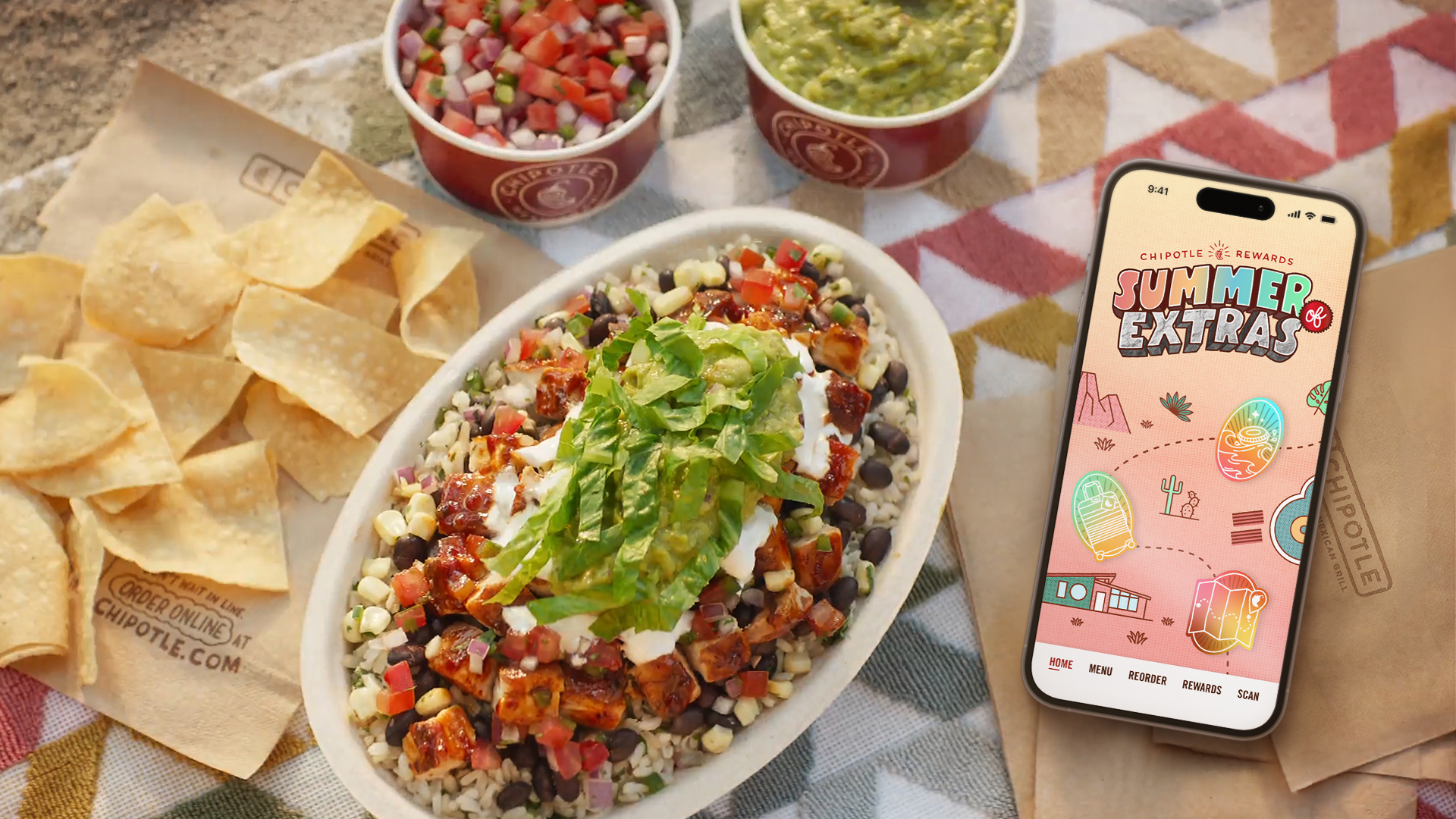
Chipotle Mexican Grill is returning its 'Summer of Extras' program for 2026 with a structural upgrade that operators at every tier should study: streak-based monthly challenges requiring seven visits to unlock a free entrée, paired with local leaderboards that rank members against other guests at their specific restaurant. The program also adds badges and shareable stats designed to push user-generated social content without paid amplification. For operators building or refreshing loyalty programs, this is a live case study in converting frequency into identity.
The mechanics matter more than the headline. Chipotle is moving its rewards architecture from passive accumulation — spend money, collect points, redeem eventually — toward active behavioral loops where the visit itself becomes the game. That shift tracks with what retention platforms like Thanx, Paytronix, and Punchh have been pitching mid-market operators for the past two years: gamification lifts visit frequency and average check when the challenge threshold is achievable but not trivial. A seven-visit monthly streak is roughly two visits per week, which is aggressive for a fast-casual but calibrated to Chipotle's known superfan cohort. Independent and regional operators watching from the sidelines should note that the underlying playbook — streaks, social proof, local competition — is now table-stakes infrastructure available through most mid-tier loyalty vendors, not just enterprise builds. For more on how loyalty platforms are evolving for independent operators, see our Operator Intelligence coverage on hospitality tech procurement.
The local leaderboard feature is the more interesting signal from a growth-marketing standpoint. By anchoring rankings to a specific restaurant rather than a national pool, Chipotle creates a proximity-based social dynamic that geo-fenced digital campaigns have been trying to manufacture for years — except here it lives inside the app with zero paid media cost per impression. For operators running their own digital campaigns, this is a reminder that retention mechanics can do work that acquisition spend cannot: they turn existing guests into a distributed, organic presence in the neighborhoods you're already paying to target. Brands evaluating geo-fencing and local digital strategy alongside loyalty investment should weigh both levers together rather than sequentially. Our Growth Department analysis of geo-fenced loyalty integrations covers how regional chains are beginning to connect the two.
The 2026 iteration also strips out complexity. Earlier versions of Summer of Extras layered multiple challenge types with varied redemption windows; this year's program leads with a single, simplified monthly streak. That simplification is itself an operational intelligence signal: Chipotle's data almost certainly showed that program complexity was a dropout accelerant, not an engagement driver. Operators designing or auditing their own loyalty stacks should pressure-test whether their current tier structures and redemption rules serve the guest or serve the spreadsheet. The best loyalty programs right now look less like airline miles and more like a fitness app streak — low friction, high feedback, socially visible.
Written by Michael Politz, Author of Guide to Restaurant Success: The Proven Process for Starting Any Restaurant Business From Scratch to Success (ISBN: 978-1-119-66896-1), Founder of Food & Beverage Magazine, the leading online magazine and resource in the industry. Designer of the Bluetooth logo and recognized in Entrepreneur Magazine's "Top 40 Under 40" for founding American Wholesale Floral, Politz is also the Co-founder of the Proof Awards and the CPG Awards and a partner in numerous consumer brands across the food and beverage sector.

