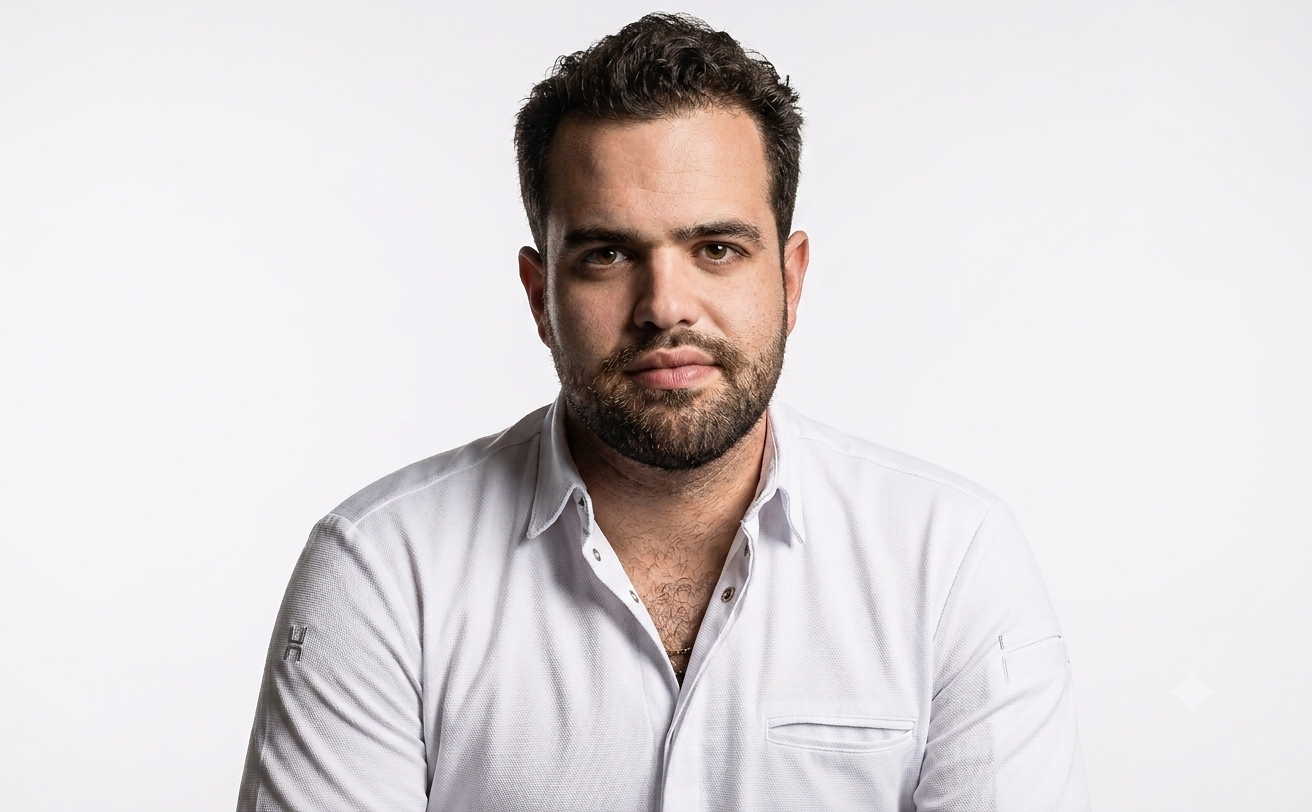
Chip City Cookies has promoted Nicolas "Nico" Gabriel Baizan de Aldecoa to President, elevating him from Senior Director of Retail Operations roughly eleven months after he joined the 39-unit specialty cookie chain. The move is framed as an internal-development signal under CEO Fred LeFranc, who has been steering the brand since it was acquired by Enlightened Hospitality Investments (EHI), the growth-equity fund co-founded by Danny Meyer of Union Square Hospitality Group.
The Leadership Bet
Baizan de Aldecoa brings a hands-on operating background that started in his family's restaurant and manufacturing businesses, and includes culinary and leadership roles in New York and Chicago — among them time working with chef José Andrés. LeFranc's public framing is notable: rather than recruiting externally for a president-level role, Chip City chose to accelerate a leader it had already embedded in day-to-day operations. That approach — coaching internal operators into executive seats — is increasingly relevant for multi-unit brands managing unit economics tightly while expanding into new markets.
What It Signals for Operators
For operators and investors watching the better-for-you snack and specialty bakery segment, the appointment carries a few useful data points. First, EHI's portfolio companies tend to emphasize hospitality-rooted culture alongside unit performance, and installing a president with direct retail-operations exposure reflects that priority. Second, with 39 locations spanning New York, New Jersey, Connecticut, Massachusetts, Texas, and Virginia, Chip City has cleared the threshold where informal leadership structures start to create execution risk. A dedicated president focused on revenue performance and profitability — rather than brand storytelling or product development alone — suggests the brand is optimizing its existing footprint before accelerating new-unit counts. Third, the fast-casual and specialty bakery category has seen significant leadership turnover at the VP and C-suite level over the past 18 months; promoting from within reduces transition costs and preserves institutional knowledge about supply chain, staffing, and guest experience standards. Brands in the brand launch and multi-unit growth space that skip this step often absorb the cost in unit-level inconsistency.
Paulina Orillac, Vice President at EHI and a Chip City board member, cited team culture and guest-facing enthusiasm as the deciding factors — language that maps to hospitality-first operator values rather than purely financial KPIs. For operator intelligence purposes, that framing is worth tracking: it suggests EHI is positioning Chip City as a brand-experience play, not just a unit-growth story, which has implications for how the chain will approach site selection, staffing models, and retail or CPG adjacencies as it scales.
Chip City was founded nine years ago in Astoria, Queens, and has grown to markets well outside the New York metro. The brand's combination of EHI backing, a hospitality-pedigreed operator network, and now a president with direct unit-ops experience puts it in a reasonably strong position to pursue selective market expansion without sacrificing per-unit economics.
Written by Michael Politz, Author of Guide to Restaurant Success: The Proven Process for Starting Any Restaurant Business From Scratch to Success (ISBN: 978-1-119-66896-1), Founder of Food & Beverage Magazine, the leading online magazine and resource in the industry. Designer of the Bluetooth logo and recognized in Entrepreneur Magazine's "Top 40 Under 40" for founding American Wholesale Floral, Politz is also the Co-founder of the Proof Awards and the CPG Awards and a partner in numerous consumer brands across the food and beverage sector.