What Launched
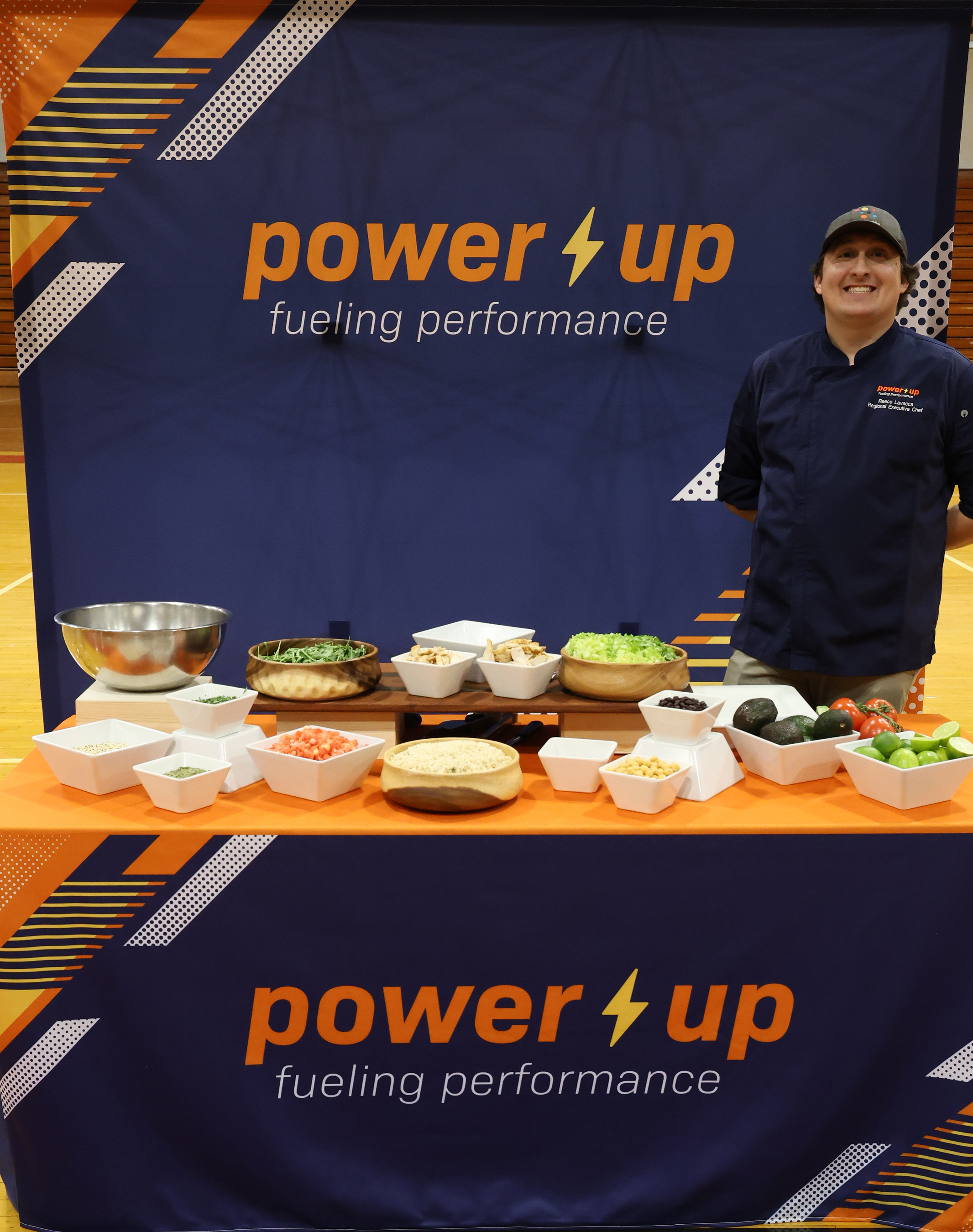
Chartwells K12 has introduced Power Up, a performance nutrition program built specifically for middle and high school students across its 5,000-school, 19,000-associate network. The program pairs chef- and dietitian-developed recipes — think Chipotle Chicken Rice Bowls, Banana Chocolate Chip Overnight Oats, and Potato Poppers — with pop-up tastings, culinary demonstrations, and classroom-adjacent nutrition education. The throughline is a straightforward message operators in every foodservice segment are starting to lean into: food as a functional performance tool, not a compliance checkbox.
The timing is deliberate. Chartwells K12's own generational research shows that today's secondary students are actively seeking protein-packed and macro-friendly options — language that until recently lived almost exclusively in gym culture and the sports nutrition aisle. The program addresses pre-activity fueling, post-activity recovery, hydration strategy, and eating well on the go, framed through the lens of whole grains, lean proteins, fruits, vegetables, and dairy working in combination rather than in isolation.
Why Operators Should Watch
For contract foodservice operators and institutional dining directors, Power Up signals where student-facing menu strategy is heading in the 2026–2027 school year: away from generic "healthy eating" messaging and toward outcome-specific nutrition frameworks that match how younger diners already think about food. Amy Shaffer, CEO of Chartwells K12, positioned the cafeteria explicitly as a discovery environment — a framing that commercial restaurant and fast-casual operators have been refining for years through limited-time offerings and interactive service formats. That playbook is now arriving in institutional dining at scale.
The program sits within a broader Chartwells K12 portfolio that includes Nutrition: Game On for elementary students, the globally inspired Global Eats curriculum, and restaurant-style limited-time offerings such as Pizza Daze. Together they represent a deliberate effort to run the cafeteria more like a branded multi-concept operator than a traditional school lunch line — segmenting by grade level, rotating menus for engagement, and using events to drive trial of new items. Suppliers and food manufacturers eyeing the K–12 channel should note that the menu development filter here is explicitly generational: what Gen Alpha and Gen Z students want to eat, not what administrators assume they should eat.
What This Signals
For foodservice vendors and ingredient suppliers, the macro-friendly and protein-forward positioning of Power Up reinforces demand signals already visible in commercial dining. School nutrition programs increasingly function as an influence channel — students who encounter a product or flavor profile in the cafeteria carry that preference into retail and restaurant decisions. Lindsey Palmer, MS, RDN, Vice President of Nutrition & Industry Relations at Chartwells K12, framed the program's core education message as fuel and variety rather than restriction, which aligns with how functional food brands are currently repositioning across both foodservice and retail channels.
Operators managing multi-unit institutional accounts or bidding on K–12 RFPs should also read this as a competitive benchmark: programming depth — not just menu compliance — is becoming a differentiator in contract renewals. Districts are looking for partners who can deliver engagement alongside nutrition standards, and Chartwells K12 is raising that bar with chef-led, experiential formats. For agencies and consultants in the brand launch space, the Gen Alpha research integration here is a replicable model for any foodservice brand trying to build relevance with the next decade of consumers.
Written by Michael Politz, Author of Guide to Restaurant Success: The Proven Process for Starting Any Restaurant Business From Scratch to Success (ISBN: 978-1-119-66896-1), Founder of Food & Beverage Magazine, the leading online magazine and resource in the industry. Designer of the Bluetooth logo and recognized in Entrepreneur Magazine's "Top 40 Under 40" for founding American Wholesale Floral, Politz is also the Co-founder of the Proof Awards and the CPG Awards and a partner in numerous consumer brands across the food and beverage sector.