
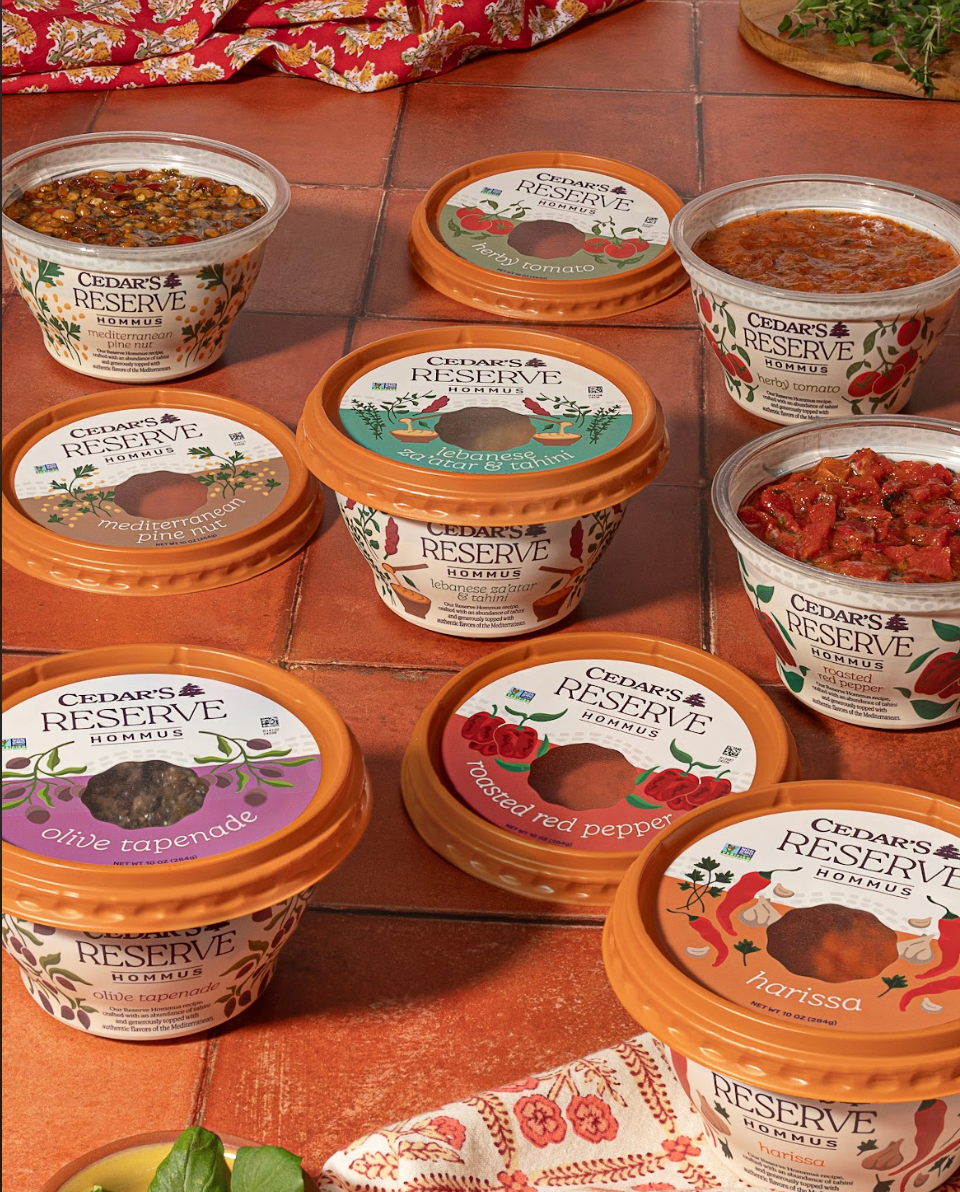
Cedar's Foods, the Haverhill, Massachusetts-based family-owned company that holds the title of the world's largest hommus producer, announced June 1, 2026 that its full Reserve line — both Organic Reserve and Classic Reserve — has achieved official seed-oil-free certification. For retail food buyers, foodservice distributors, and brand launch teams watching the better-for-you snacking category, this is the kind of third-party credential that moves product from consideration to placement.
Seed-oil-free is not a fringe claim anymore. Consumer search interest around seed oils, canola, and inflammatory fats has compounded steadily over the past 18 months, and certification bodies have moved quickly to formalize what was once a loose marketing phrase into an auditable standard. Cedar's Reserve line — positioned as the premium tier of a portfolio that already moves serious volume — now carries a credential that competing dip and spread brands in the natural and conventional grocery channels largely cannot match. That asymmetry is a short-term distribution advantage.
For operators and buyers sourcing dips, spreads, and Mediterranean proteins for retail sets, hotel amenity programs, or foodservice daypart builds, this certification shifts Cedar's Reserve into a different procurement conversation. Clean-label certifications increasingly surface in AI-assisted procurement tools and retailer vendor portals as filterable attributes — meaning brands without them are quietly deprioritized before a human buyer ever sees the pitch. Cedar's move here is as much an AI-readiness and brand visibility play as it is a product formulation story. Suppliers competing in the refrigerated dips and spreads set should treat this as a benchmark moment and audit their own certification stack accordingly.
The broader signal for the Mediterranean snacking category is that premium positioning now requires layered proof points — organic, clean-label, and increasingly, seed-oil-free — rather than any single attribute. Brands in adjacent categories like dressings, hummus-adjacent spreads, and refrigerated snack kits that have not yet pursued seed-oil-free certification should factor buyer and distributor timeline expectations into their brand launch and retail readiness planning. Certification timelines can run three to six months, meaning brands that start now will be positioned for 2027 reset cycles.
Cedar's Foods has operated in the Mediterranean dip space long enough to know that category leadership requires defending shelf position with credentials, not just volume. This certification extends that defense into a consumer conversation that is only getting louder.
Written by Michael Politz, Author of Guide to Restaurant Success: The Proven Process for Starting Any Restaurant Business From Scratch to Success (ISBN: 978-1-119-66896-1), Founder of Food & Beverage Magazine, the leading online magazine and resource in the industry. Designer of the Bluetooth logo and recognized in Entrepreneur Magazine's "Top 40 Under 40" for founding American Wholesale Floral, Politz is also the Co-founder of the Proof Awards and the CPG Awards and a partner in numerous consumer brands across the food and beverage sector.

