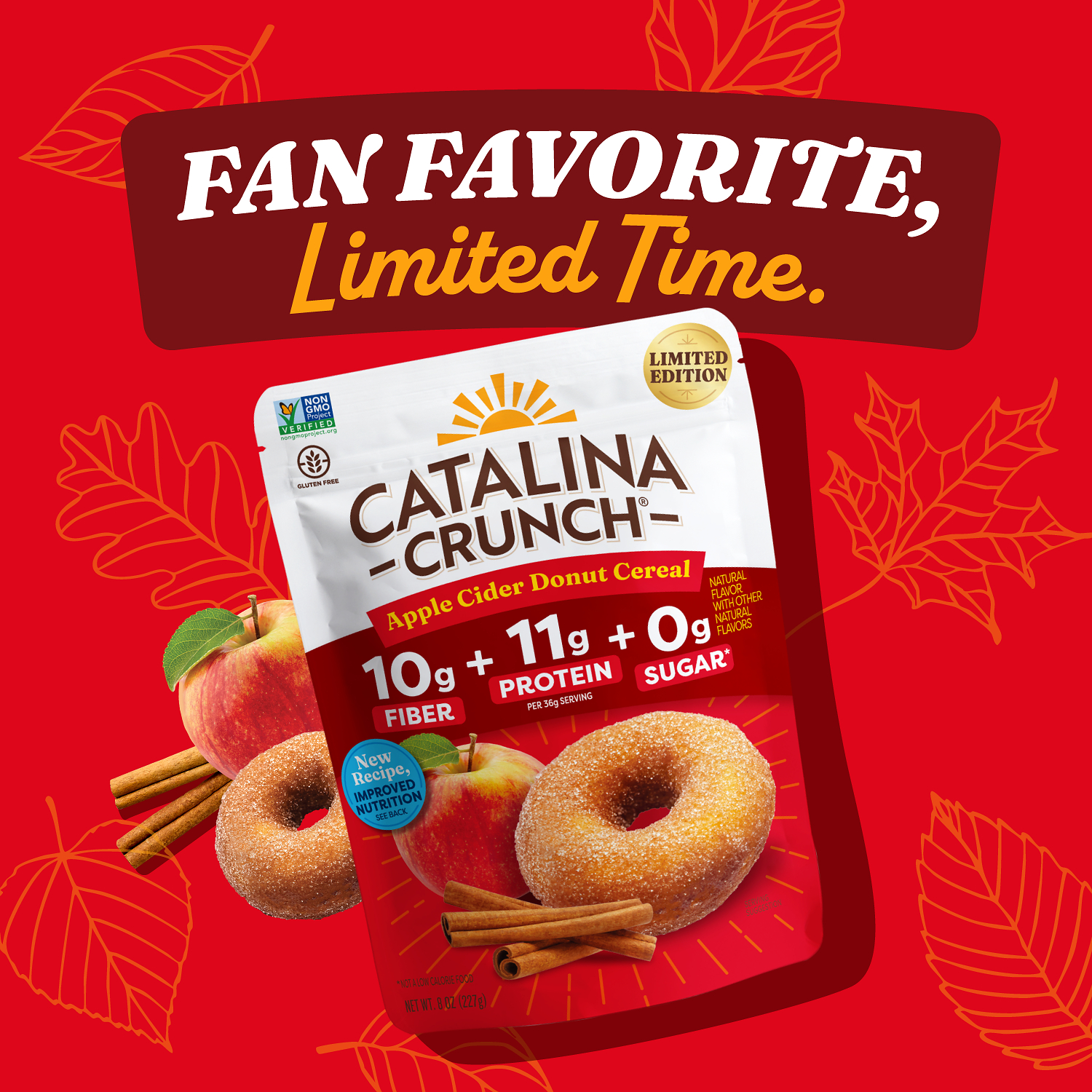
Limited-time seasonal SKUs are carrying more weight than ever in the better-for-you cereal category, and Catalina Crunch is using this fall's Apple Cider Donut Cereal relaunch to demonstrate exactly how to sharpen one. The brand, operated by Catalina Snacks, is bringing back the fan-requested flavor with upgraded nutritional credentials: 11g of plant-based protein, 10g of fiber, and 0g of sugar per serving — improvements over last year's formulation that position the SKU more competitively against a crowded functional-snack shelf.
Why Retailers Are Watching
For category buyers and foodservice procurement teams, the move is worth noting beyond the seasonal novelty. Catalina Crunch is stacking certifications — Non-GMO Project Verified, gluten-free, keto-friendly, kosher, and explicitly GLP-1 friendly — a positioning cluster that reflects where functional food demand is heading in 2026 and into 2027. GLP-1 compatibility is becoming a meaningful on-pack claim as retail buyers at mass, natural, and specialty channels field growing consumer interest around satiety and low-sugar nutrition. Brands that can credibly occupy that space while delivering taste parity are earning more facings.
Distribution for the returning SKU spans catalinacrunch.com, Amazon, and Walmart.com, a deliberately omnichannel footprint that lets the brand capture both DTC repeat buyers and mass-channel trial simultaneously. For operators and brand-launch advisors tracking shelf strategy, the DTC-plus-mass combination lets Catalina Crunch use Amazon ranking and direct site velocity data to inform retail replenishment conversations — a playbook increasingly common among high-growth snack brands trying to prove sell-through before committing to deeper distribution.
Seasonal SKU as a Brand Signal
Founder Krishna Kaliannan described the flavor's annual return as a "seasonal ritual" for the brand's customer base — language that signals intentional scarcity management rather than a one-off product test. Brands that treat limited-time offerings as community events, tracking inbound demand between cycles and using that data to negotiate with retail buyers, extract more value from each relaunch than those treating seasonal SKUs as clearance vehicles. The Apple Cider Donut formula improvement — adding fiber density over the prior version — also suggests Catalina Crunch is using the seasonal window to refine core nutritional architecture, not just repackage an existing product.
For operators sourcing better-for-you grab-and-go or breakfast options, the category context matters: the functional cereal and snack segment has seen consistent velocity growth at both mass and specialty retailers as GLP-1 drug adoption shifts consumer grocery behavior toward high-protein, high-fiber, low-sugar formats. Brands entering or expanding in this space are finding that tight macro profiles and clean certification stacks are table stakes. Catalina Crunch's ability to deliver those specs in a craveable seasonal format — without added sugar — represents the kind of product-market fit that earns repeat placement. Buyers and brokers working the natural and specialty channel should track how this SKU performs through Q4, as the brand has indicated further innovation is coming through the remainder of the year and into 2027.
For more on how seasonal brand launches are structured for retail success, see our coverage of brand launch strategy for emerging food brands and operator intelligence on functional food trends.
Written by Michael Politz, Author of Guide to Restaurant Success: The Proven Process for Starting Any Restaurant Business From Scratch to Success (ISBN: 978-1-119-66896-1), Founder of Food & Beverage Magazine, the leading online magazine and resource in the industry. Designer of the Bluetooth logo and recognized in Entrepreneur Magazine's "Top 40 Under 40" for founding American Wholesale Floral, Politz is also the Co-founder of the Proof Awards and the CPG Awards and a partner in numerous consumer brands across the food and beverage sector.