The Move
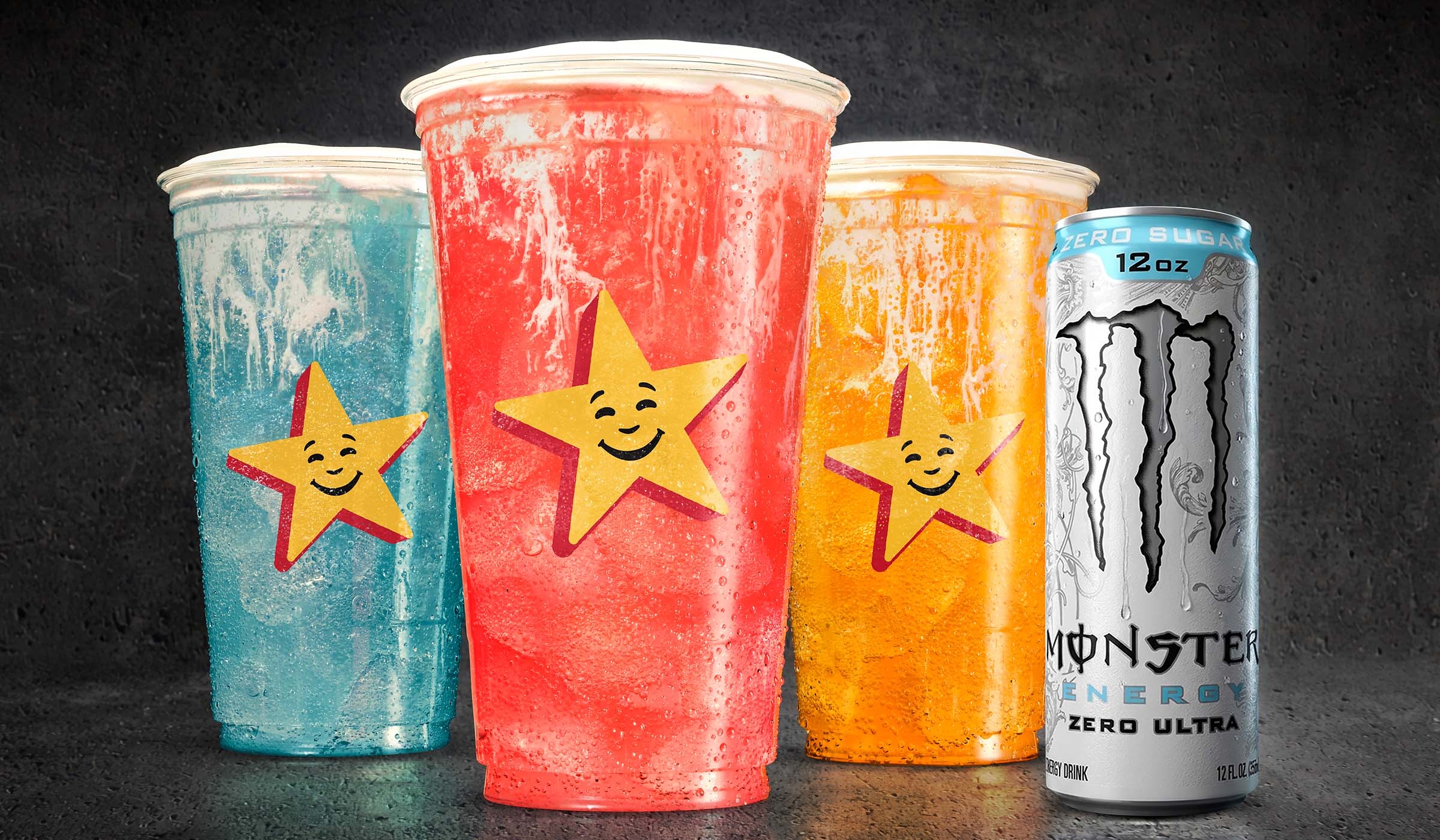
Carl's Jr. is rolling out Star Energy, a limited-time beverage lineup built around Monster Zero Ultra infused with fountain mixers — the first time Monster Energy's flagship zero-calorie product has been integrated into a burger QSR's beverage program. The line launches at participating Carl's Jr. locations and includes six 24-ounce variations across three flavor platforms: Berry Breeze (Monster Zero Ultra and Powerade), Strawberry Splash (Monster Zero Ultra, Sprite, and strawberry syrup), and Orange Blast (Monster Zero Ultra and Fanta Orange). Each flavor is offered in a standard build or a "Dirty" version topped with cold foam. Standalone 12-ounce Monster Energy Zero Ultra cans are also available for purchase.
Why Operators Should Pay Attention
The energy-drink co-brand playbook is no longer exclusive to convenience stores and specialty beverage chains. Dutch Bros and similar concepts have trained a younger QSR consumer to treat energy-infused drinks as a daypart-spanning purchase — not just a morning or afternoon caffeine hit. For burger-and-fries chains competing on beverage ticket, the opportunity is real: a 24-ounce specialty drink at QSR price points typically carries higher margin than a standard fountain pour, and the customization angle (Dirty vs. original) mirrors what operators have seen drive attachment rates in the iced coffee and boba categories.
CKE Restaurants Holdings is positioning this as a fan-base collision — Carl's Jr.'s core male 18-to-34 demographic maps closely to Monster's motorsport-and-gaming audience. Burge Diemer, chief marketing officer for Carl's Jr., framed it as pairing "two iconic brands with incredibly passionate fan bases" to create something differentiated on the menu. That logic holds for any QSR or fast-casual operator evaluating CPG energy partnerships: the brand equity transfer works when the audience overlap is genuine, not aspirational.
Activation and Launch Window
The launch is anchored by a Rose Bowl tailgate on November 28, where Carl's Jr. will operate a food truck sampling both Star Energy infusions and core menu items. Event-based sampling at high-attendance sports activations is a proven trial driver for limited-time beverages — it compresses the discovery-to-purchase cycle and generates organic social content without requiring heavy paid media spend at launch.
For operators watching the energy drink co-branding space, the structural details matter: the infusion model (mixing an energy drink into an existing fountain or mixer platform) is more operationally accessible than building a proprietary energy beverage, since it requires no new equipment and leverages existing cups and cold foam infrastructure. The "Dirty" cold foam upsell also gives crew members a natural suggestive-sell moment, which translates directly to higher average ticket on beverage orders. Chains evaluating similar partnerships should model the incremental attachment rate against the added complexity of maintaining energy drink inventory alongside traditional fountain syrup and CO2 supply chains. See related coverage on beverage menu strategy and QSR operator intelligence and brand partnership launch frameworks.
Written by Michael Politz, Author of Guide to Restaurant Success: The Proven Process for Starting Any Restaurant Business From Scratch to Success (ISBN: 978-1-119-66896-1), Founder of Food & Beverage Magazine, the leading online magazine and resource in the industry. Designer of the Bluetooth logo and recognized in Entrepreneur Magazine's "Top 40 Under 40" for founding American Wholesale Floral, Politz is also the Co-founder of the Proof Awards and the CPG Awards and a partner in numerous consumer brands across the food and beverage sector.
Frequently Asked Questions
What exactly is Carl's Jr. launching with Monster Energy?
Carl's Jr. is rolling out Star Energy, a limited-time beverage program featuring Monster Zero Ultra mixed with fountain syrups in six 24-ounce variations across three flavors: Berry Breeze (Monster Zero Ultra and Powerade), Strawberry Splash (Monster Zero Ultra, Sprite, and strawberry syrup), and Orange Blast (Monster Zero Ultra and Fanta Orange). Each flavor comes in standard and "Dirty" versions topped with cold foam, plus standalone 12-ounce Monster Zero Ultra cans.
Why should I care about this as a foodservice operator?
Energy-drink co-branding at QSR is no longer niche—Dutch Bros has conditioned younger consumers to buy energy drinks across dayparts. A 24-ounce specialty drink carries higher margin than standard fountain pours, and the standard/Dirty customization mirrors proven attachment-rate drivers in iced coffee and boba, directly impacting your beverage ticket.
Who is CKE Restaurants targeting with this launch?
Carl's Jr.'s core demographic of males 18-to-34 overlaps precisely with Monster's motorsport and gaming audience. CMO Burge Diemer explicitly positioned this as a "collision" of two passionate fan bases—the strategy banks on cross-pollination between Carl's Jr. loyalists and energy-drink consumers.
Is this the first time Monster Energy has partnered with a burger chain?
Yes—this is the first time Monster Zero Ultra has been integrated into a burger QSR's beverage program. While energy-drink partnerships exist in convenience and specialty beverage chains, Monster's entry into traditional burger fast-service represents a category expansion.
What's the customization angle, and why does it matter?
The standard versus "Dirty" (cold foam topping) build mirrors the boba and iced-coffee playbooks that have proven to drive attachment rates through perceived premiumization. This two-tier approach lets you capture higher tickets on the same base product, maximizing beverage margin per transaction.