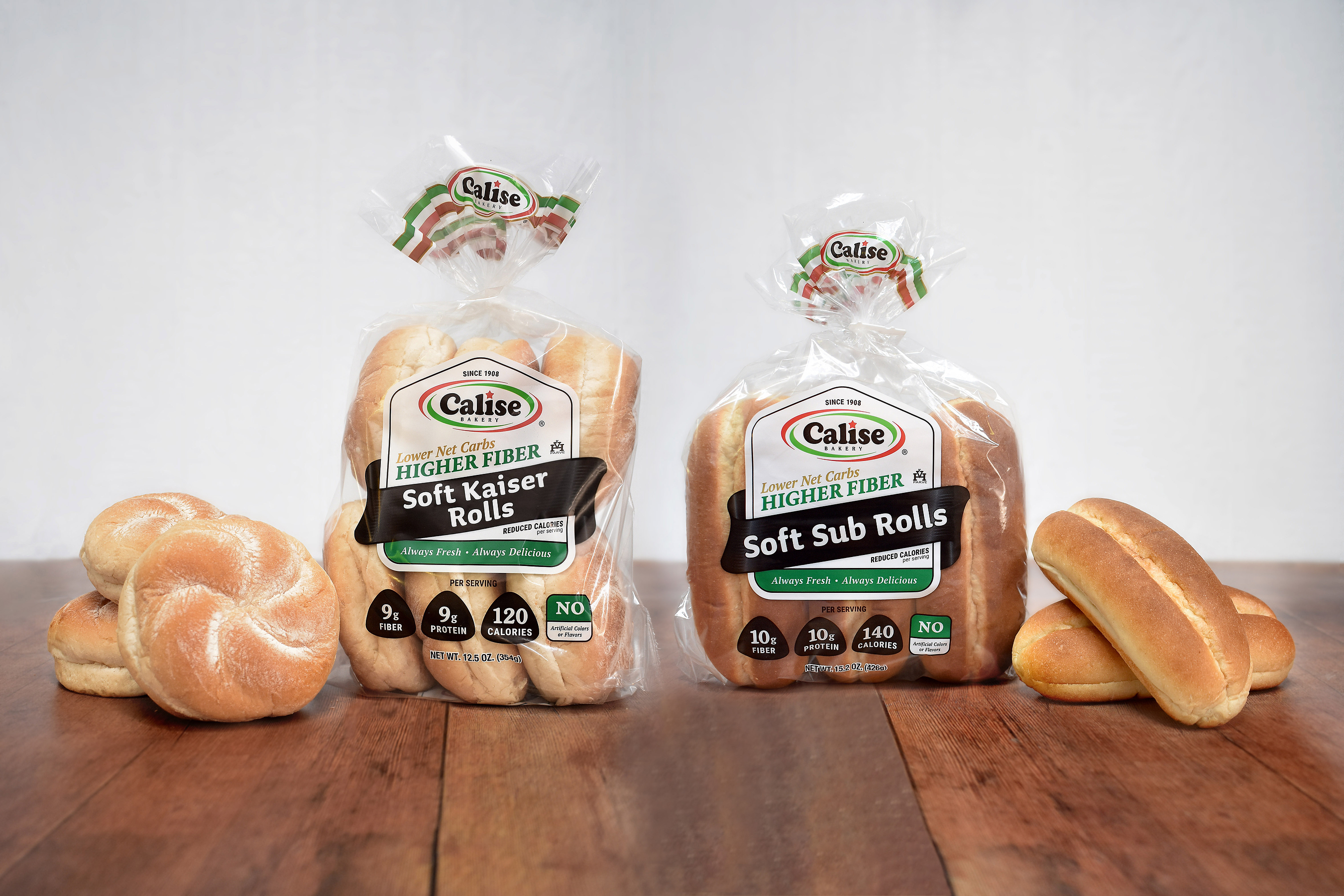
New England-rooted Calise Bakery is expanding its commercial roll lineup with two higher-fiber, higher-protein products — the Higher Fiber Soft Kaiser Roll and the Higher Fiber Soft Sub Roll — targeting the growing operator demand for better-for-you center-of-plate bread without a format overhaul.
The Kaiser delivers 9g of fiber and 9g of protein at 120 calories per roll; the Sub version steps up to 10g of fiber and 10g of protein at 140 calories. Both are free of artificial colors and flavors, and carry a clean-label profile that includes no nuts, dairy, eggs, sesame seeds, trans fats, high fructose corn syrup, artificial preservatives, or hydrogenated oils. For operators navigating allergen disclosures and guest nutrition expectations, that stack of negatives matters as much as the positive nutrition profile.
Why the Format Matters
The product strategy here isn't reinvention — it's substitution. Calise is targeting the bread already sitting in your back-of-house: the Kaiser running breakfast sandwiches and burgers, the sub roll anchoring your lunch set. Rather than asking operators to introduce an unfamiliar SKU that requires guest education, the Higher Fiber line is designed to drop into existing menu slots. That reduces adoption friction and lets operators lead with a cleaner ingredient story on menu copy or digital ordering platforms without retraining staff or retooling prep flow.
The move tracks with a broader shift in the sandwich and bakery category. Better-for-you bread innovation has historically skewed toward retail — thin-sliced loaves, keto wraps, sprouted grain niche plays — while foodservice stayed conservative. That gap is closing. Operators sourcing buns and rolls for fast-casual and full-service menus are fielding more guest inquiries about fiber and protein content, particularly as GLP-1 medication adoption reshapes portion and macronutrient expectations among a growing share of dining guests. A roll that delivers double-digit grams of both fiber and protein in a familiar format is positioned directly for that conversation.
Procurement Considerations
Calise has been producing commercial breads, par-baked, and frozen formats for over a century, which means the Higher Fiber line arrives with established foodservice distribution infrastructure rather than as a startup pitch. Operators evaluating the SKU for broadliner orders or direct-ship programs should confirm regional availability — the initial rollout targets select retailers nationwide, with foodservice channel specifics worth a direct inquiry. The allergen-clean profile simplifies back-of-house labeling for operations managing multi-allergen menus, and the lack of hydrogenated oils or HFCS supports on-menu marketing claims that resonate with health-conscious guests.
For procurement teams benchmarking bread and roll suppliers, the Calise launch is a signal that mid-tier specialty bakers are moving into the functional-ingredient lane previously dominated by larger commodity bakers and niche better-for-you brands. Operators sourcing in the Northeast already familiar with Calise's portfolio have a straightforward trial path; those evaluating it as a new vendor should weigh lead times and MOQs against the clean-label upside. Brand launch teams working with hospitality groups on menu development and retail-readiness programs will also want to track this category shift as consumer nutrition expectations continue to bleed from retail into foodservice.
Written by Michael Politz, Author of Guide to Restaurant Success: The Proven Process for Starting Any Restaurant Business From Scratch to Success (ISBN: 978-1-119-66896-1), Founder of Food & Beverage Magazine, the leading online magazine and resource in the industry. Designer of the Bluetooth logo and recognized in Entrepreneur Magazine's "Top 40 Under 40" for founding American Wholesale Floral, Politz is also the Co-founder of the Proof Awards and the CPG Awards and a partner in numerous consumer brands across the food and beverage sector.