The Move
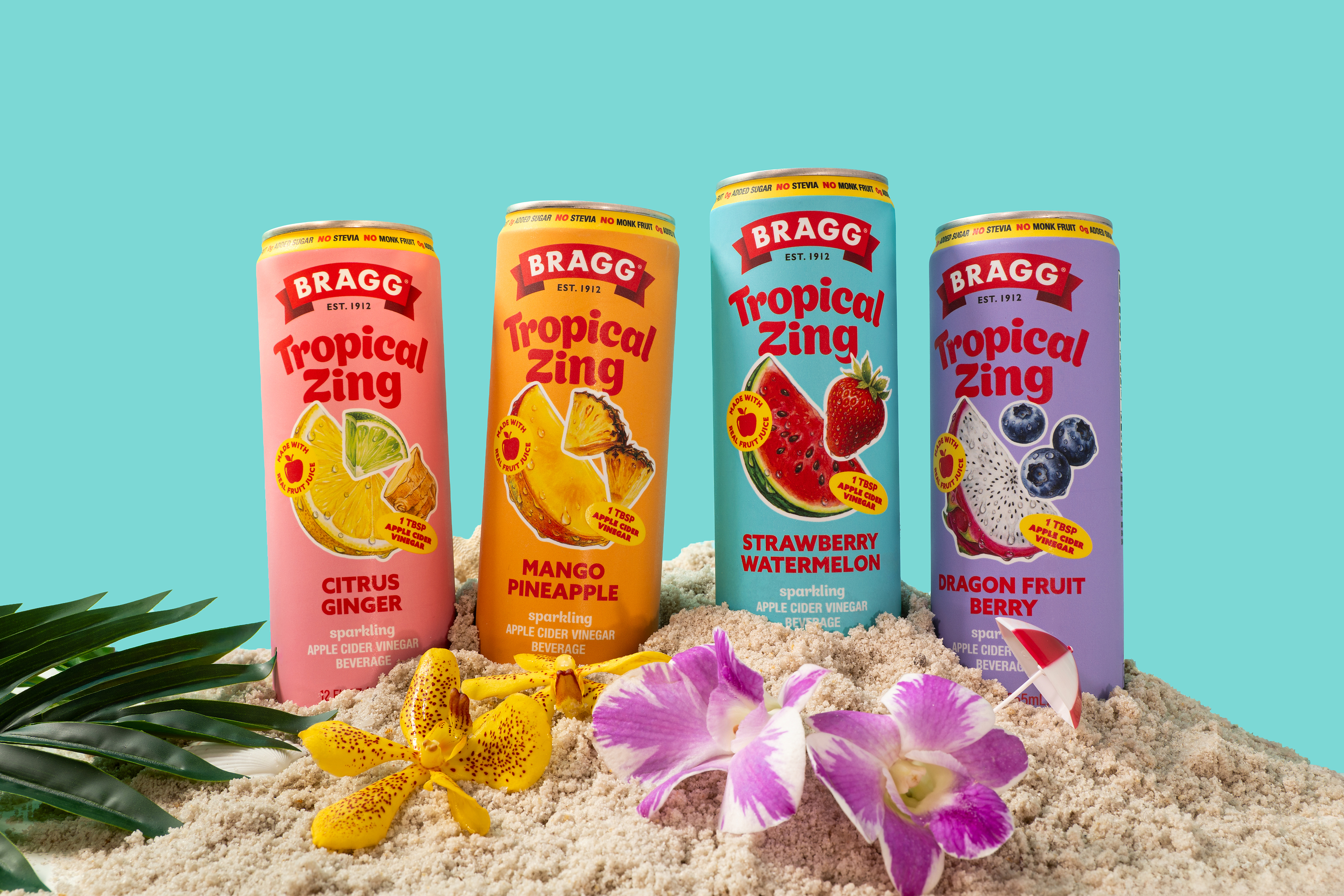
Bragg Live Foods, the 113-year-old natural foods company best known for its organic apple cider vinegar, is launching Bragg Tropical Zing Sparkling Apple Cider Vinegar Beverage — a 12-ounce RTD can delivering one full tablespoon of Bragg Organic Apple Cider Vinegar alongside real fruit juice, 40 calories, and zero grams of added sugar. Four SKUs launch in late October via e-commerce: Strawberry Watermelon, Mango Pineapple, Citrus Ginger, and Dragon Fruit Berry. Suggested retail is $2.49 per can or $8.99 for a four-pack.
For buyers and category managers watching the functional beverage set, this is a meaningful brand equity play. Bragg is not a challenger brand trying to borrow ACV credibility — it is the category originator converting its core ingredient into a format built for the RTD occasion. The product is Non-GMO Project Verified, uses no stevia or monk fruit, and positions squarely against the growing field of sparkling wellness beverages that have been colonizing refrigerated and ambient sets at natural, grocery, and mass retail over the past two years.
The Consumer Data
Bragg commissioned two independent research studies to frame the launch. A Talker Research survey of 1,000 U.S. adults found that 57.0% of Americans want a simpler approach to supporting their health, and 47.0% report feeling overwhelmed by wellness decision-making. A separate Big Village Research study of 2,010 U.S. adults found that nearly 35.0% of Americans say taste is the primary barrier preventing them from making ACV a regular habit. Those numbers do meaningful work for a brand pitching a palatable, grab-and-go alternative to the traditional ACV shot or diluted-in-water ritual.
For operators and retail buyers, this signals a usable demand argument: the total addressable audience for ACV is larger than current purchase behavior suggests, and format — not ingredient skepticism — is the friction point. That framing should travel well into buyer decks and category review presentations as Bragg pursues brick-and-mortar placement beyond its e-commerce launch window.
What Operators Should Watch
The e-commerce-first rollout is a deliberate sequencing choice. It allows Bragg to build velocity data and consumer review depth before retail chain presentations — a playbook now common among better-for-you beverage brands navigating functional RTD shelf competition. Buyers at natural and conventional grocery should expect an inbound pitch backed by that data within the next two to three quarters.
The $2.49 single-can price point lands at the accessible end of the premium functional beverage spectrum, undercutting several kombucha and adaptogen sparkling water brands while holding enough margin to survive distributor markup on the path to retail. For foodservice and hospitality operators building wellness-forward beverage programs — hotel minibars, spa cafés, airport grab-and-go — the four-pack at $8.99 and the clean label profile make it a plausible addition to better-for-you beverage menus without requiring significant consumer education at point of sale.
CEO Linda Boardman framed the launch as a format evolution rather than a brand extension: Bragg Tropical Zing combines the brand's trusted apple cider vinegar with fruit-forward flavors and the quality standards the brand has maintained since 1912. That positioning — heritage ingredient, modern format — is increasingly the template for legacy wellness brands converting ingredient authority into RTD volume.
Key takeaways for operators and buyers:
Written by Michael Politz, Author of Guide to Restaurant Success: The Proven Process for Starting Any Restaurant Business From Scratch to Success (ISBN: 978-1-119-66896-1), Founder of Food & Beverage Magazine, the leading online magazine and resource in the industry. Designer of the Bluetooth logo and recognized in Entrepreneur Magazine's "Top 40 Under 40" for founding American Wholesale Floral, Politz is also the Co-founder of the Proof Awards and the CPG Awards and a partner in numerous consumer brands across the food and beverage sector.