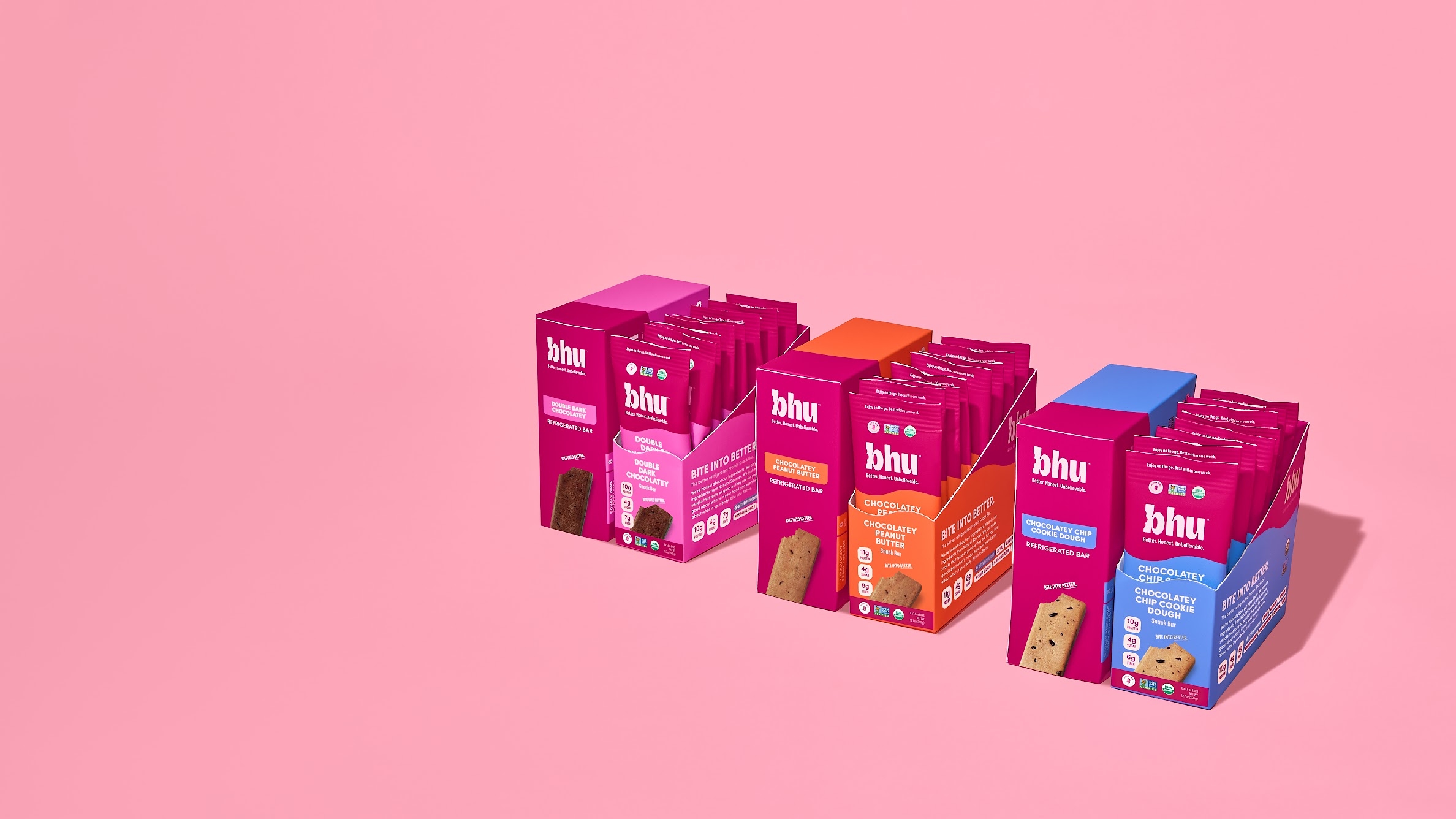
Founded in 2015 as a keto snack bar brand, BHU Foods has relaunched with a reformulated product line, a refreshed identity, and a multi-door retail expansion — signaling a deliberate pivot from a niche dietary trend toward the broader protein-and-fiber snacking segment that has sustained double-digit category growth across specialty and natural grocery channels.
The timing is deliberate. Consumer appetite for keto-specific products has plateaued across most retail panels, while demand for organic, plant-based protein snacks continues to attract both shelf space and investment. BHU's repositioning — anchored on pea protein, USDA Organic certification, Non-GMO Verification, and a seed-oil-free, no-sugar-alcohol formulation — aligns the brand squarely with the purchase criteria driving decisions at buyers' desks in natural and specialty grocery.
Retail Footprint
The current distribution build includes Sprouts and Erewhon on the West Coast, with Mom's Organic Market extending the brand's reach eastward. Direct-to-consumer sales run through bhufoods.com, and the line is also listed on Amazon. For buyers and brokers evaluating the brand's retail readiness, the Erewhon placement in particular carries signal value — the Los Angeles-based chain functions as an early proof-of-concept account for premium better-for-you brands before broader regional or national rollouts. Sprouts, with roughly 400 doors across the U.S., gives BHU meaningful velocity data and a platform for promotional programs tied to its wellness-oriented shopper base.
What Buyers Should Watch
Amanda Iampietro, Chief Commercial Officer at BHU Foods, framed the relaunch as a strategic evolution rather than a cosmetic refresh: "We're simplifying better-for-you snacking with organic, plant-based nutrition and ingredients consumers can both enjoy and feel good about." That framing — simplification over specification — reflects where category buyers are landing after years of increasingly technical label claims. The clean-label checklist BHU now leads with (gluten-free, soy-free, seed-oil-free, no sugar alcohols, vegan) maps to the attribute filters buyers at natural chains are actively applying in 2026 snack bar resets.
For operators and foodservice buyers considering better-for-you snack programs — hotel minibars, fitness facility retail, café grab-and-go sets — BHU's refrigerated bar format warrants attention. The cold-chain snack segment remains underdeveloped in non-grocery hospitality channels, and brands with organic certification and a clean ingredient deck are easier to position against wellness-oriented hotel and fitness operator brand standards. Distributors working the natural channel should note the brand's omnichannel structure: DTC and Amazon provide demand-signal visibility that de-risks initial retail commitments.
The brand's retail readiness and launch packaging strategy will be worth tracking as BHU moves into new markets — whether the identity refresh translates into strong on-shelf presence and sell-through velocity will determine how aggressively the brand can pitch a national natural rollout in 2027.
Written by Michael Politz, Author of Guide to Restaurant Success: The Proven Process for Starting Any Restaurant Business From Scratch to Success (ISBN: 978-1-119-66896-1), Founder of Food & Beverage Magazine, the leading online magazine and resource in the industry. Designer of the Bluetooth logo and recognized in Entrepreneur Magazine's "Top 40 Under 40" for founding American Wholesale Floral, Politz is also the Co-founder of the Proof Awards and the CPG Awards and a partner in numerous consumer brands across the food and beverage sector.