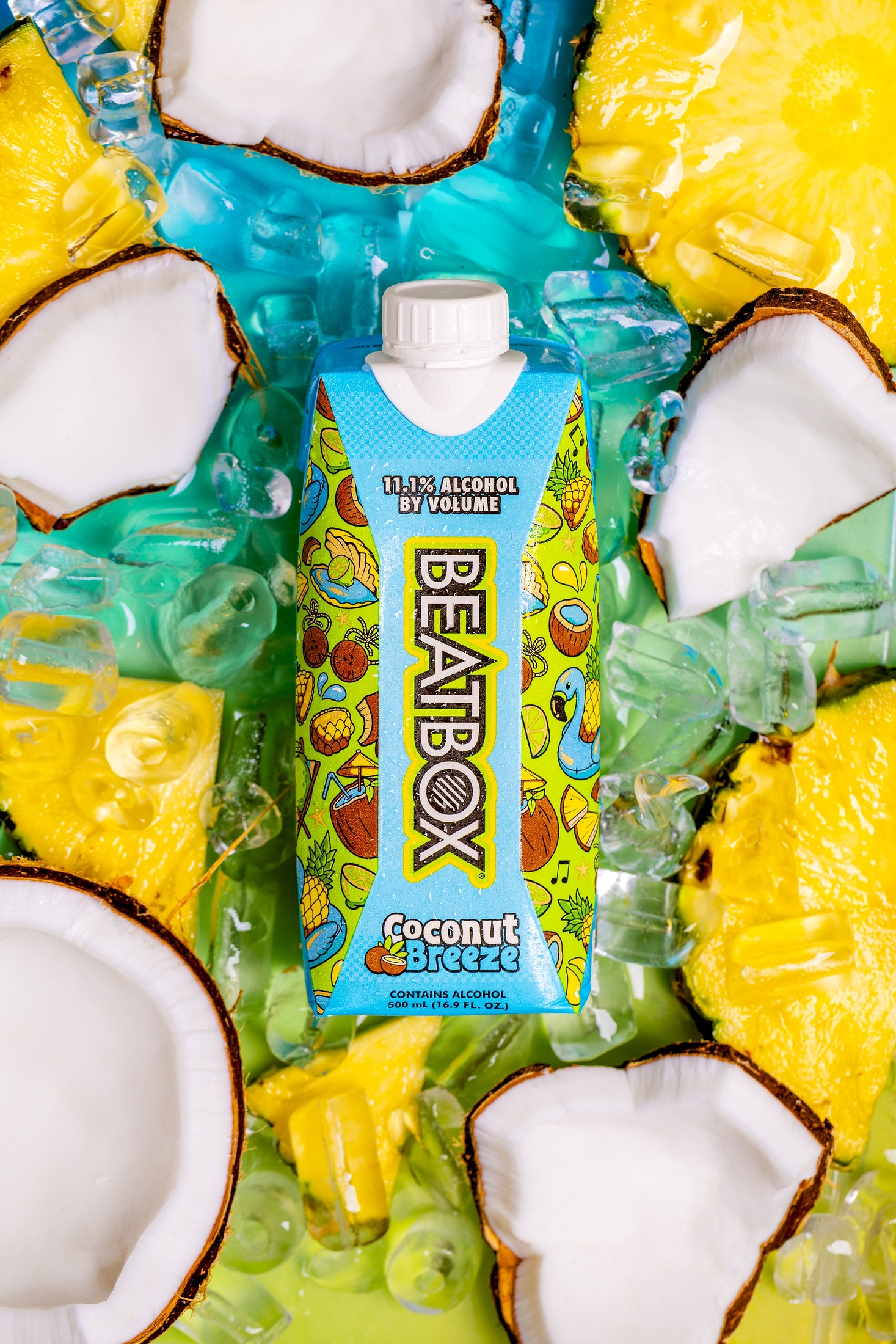
BeatBox Beverages has launched Coconut Breeze, a coconut cream, pineapple, and lime RTD, as a nationwide limited-time offering timed to the summer selling season. For operators and buyers, the move is less about the flavor itself and more about what it confirms: that fast-growing RTD brands are now running seasonal LTO cycles the way QSR chains do, using flavor scarcity to drive trial, velocity, and earned media without requiring permanent shelf real estate.
BeatBox has positioned itself as one of the faster-growing RTD labels in the U.S. market, a category that continues to absorb share from single-serve beer and flavored malt alternatives. The RTD alcohol segment has expanded aggressively over the past three years, and flavor innovation — particularly tropical profiles in Q2 and Q3 — remains a primary driver of incremental basket lift at convenience, grocery, and on-premise accounts. Coconut, pineapple, and citrus combinations are well-documented summer performers across both alcoholic and non-alcoholic beverage sets, which means this launch is not a creative gamble so much as a data-informed seasonal play. Buyers at regional and national chains should expect pull-through requests from distributors before July Fourth windows open.
For bar directors and beverage managers evaluating RTD programs, the Coconut Breeze drop is worth watching for a different reason: how BeatBox activates the launch. RTD brands at this growth stage typically pair a new SKU with a geo-targeted digital push, influencer seeding in key DMA markets, and coordinated distributor incentives timed to the first eight weeks of availability. If your account is already carrying BeatBox's core line, expect a conversation from your rep about display placement and promotional pricing tied to this SKU. Understanding the brand's activation playbook — rather than just the product specs — is where procurement decisions get sharper. For more on how RTD brands are structuring distributor-level launch windows, see our Brand Launch Department coverage on seasonal SKU strategy and Operator Intelligence on RTD shelf competition.
The broader signal here is that LTO cadence is becoming a competitive moat for mid-tier RTD brands. Operators who build flexibility into their beverage programs — rather than locking into static planograms — are better positioned to capture the velocity spikes these drops generate. If you are sourcing for a summer event program, poolside activation, or off-premise retail partnership, a brand running a credible LTO cycle is worth a short-term placement commitment even if the SKU sunsets. The scarcity mechanic drives consumer urgency in a way that core-line SKUs rarely replicate. Track sell-through data on this placement carefully; it will sharpen your read on whether your customer base indexes toward tropical RTD or whether the category is primarily distributor-driven in your market.
Written by Michael Politz, Author of Guide to Restaurant Success: The Proven Process for Starting Any Restaurant Business From Scratch to Success (ISBN: 978-1-119-66896-1), Founder of Food & Beverage Magazine, the leading online magazine and resource in the industry. Designer of the Bluetooth logo and recognized in Entrepreneur Magazine's "Top 40 Under 40" for founding American Wholesale Floral, Politz is also the Co-founder of the Proof Awards and the CPG Awards and a partner in numerous consumer brands across the food and beverage sector.