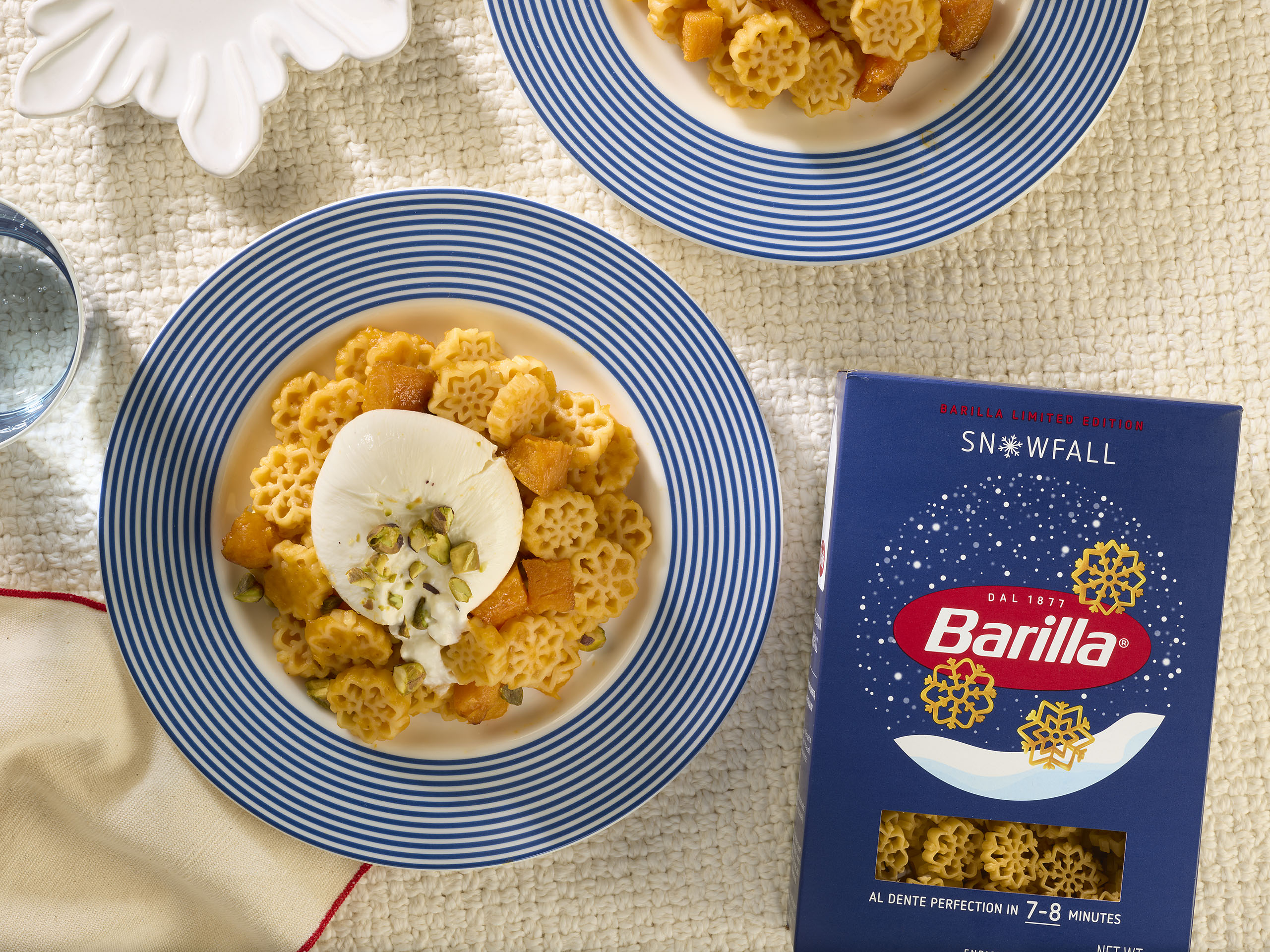
Limited-edition seasonal packaging is becoming a reliable demand lever for major pasta brands, and Barilla is deepening that bet. For the third consecutive holiday season, the brand is returning Snowfall pasta — its festive shape line — while simultaneously launching Cellentani & Elbows Limited Edition Holiday Packs, extending its seasonal footprint across two additional SKUs available through January 2027.
For foodservice buyers and retail category managers, the move is worth tracking. Barilla's willingness to bring Snowfall back for a third year signals that the initial retail sell-through justified repeat production commitments — a data point that matters when evaluating how seasonal limited runs perform against permanent shelf space. The holiday packs are confirmed at Walmart, Amazon, Publix, Albertsons, and Kroger, meaning the distribution network was already in place and execution focused on design and recipe programming rather than new channel negotiation.
The Product Logic
Snowfall features three shapes — a traditional snowflake, a poinsettia-inspired form, and a heart-centered design — all with sauce-catching grooves engineered for cold-weather recipes. The shape spec matters: grooves improve sauce adhesion and meal satisfaction perception, which supports recipe content and in-store demo narratives. The two new holiday packs dress existing Cellentani and Elbows shapes in winter-themed packaging rather than changing the product itself, keeping production complexity low while refreshing the visual merchandising story at shelf.
Barilla is pairing the launch with four recipe placements — Snowfall with Butternut Squash and Burrata, Snowfall White Chicken Chili, Cellentani Baked Dill Pickle Mac & Cheese, and Classic Elbows One Pot Caramelized French Onion Pasta — each designed to anchor a specific seasonal occasion and social content cycle. Recipe-led launches like this have become standard practice for CPG brands trying to earn organic impressions without solely relying on paid media during a congested Q4 media environment.
What This Signals for Operators
For restaurant and foodservice operators, the Barilla seasonal push has two practical takeaways. First, holiday-shaped pasta is a proven menu add for catering menus, prix fixe holiday specials, and kids' programming — the shapes carry visual storytelling that photographs well and reduces the need for elaborate plate garnish. Second, the retail execution here offers a template: limited availability through January, broad multi-channel distribution, and recipe-forward content are the three pillars Barilla is using to sustain consumer urgency without discounting.
Buyers sourcing specialty or seasonal pasta for hospitality accounts should note that limited runs tied to major brand names like Barilla move through distribution quickly, and lead times for Q1 carry-over orders will compress if sell-through at mass retail is strong. Procurement teams planning winter menus should lock quantities early if the shapes fit their concept.
For brands watching category trends, Barilla's third-year return also reflects a broader shift in how CPG brand launch strategy is evolving — seasonal SKUs are no longer one-off experiments but recurring revenue lines with their own retail calendar logic. That rhythm increasingly informs how operators approach seasonal menu planning and how category buyers negotiate shelf resets heading into Q1.
Written by Michael Politz, Author of Guide to Restaurant Success: The Proven Process for Starting Any Restaurant Business From Scratch to Success (ISBN: 978-1-119-66896-1), Founder of Food & Beverage Magazine, the leading online magazine and resource in the industry. Designer of the Bluetooth logo and recognized in Entrepreneur Magazine's "Top 40 Under 40" for founding American Wholesale Floral, Politz is also the Co-founder of the Proof Awards and the CPG Awards and a partner in numerous consumer brands across the food and beverage sector.