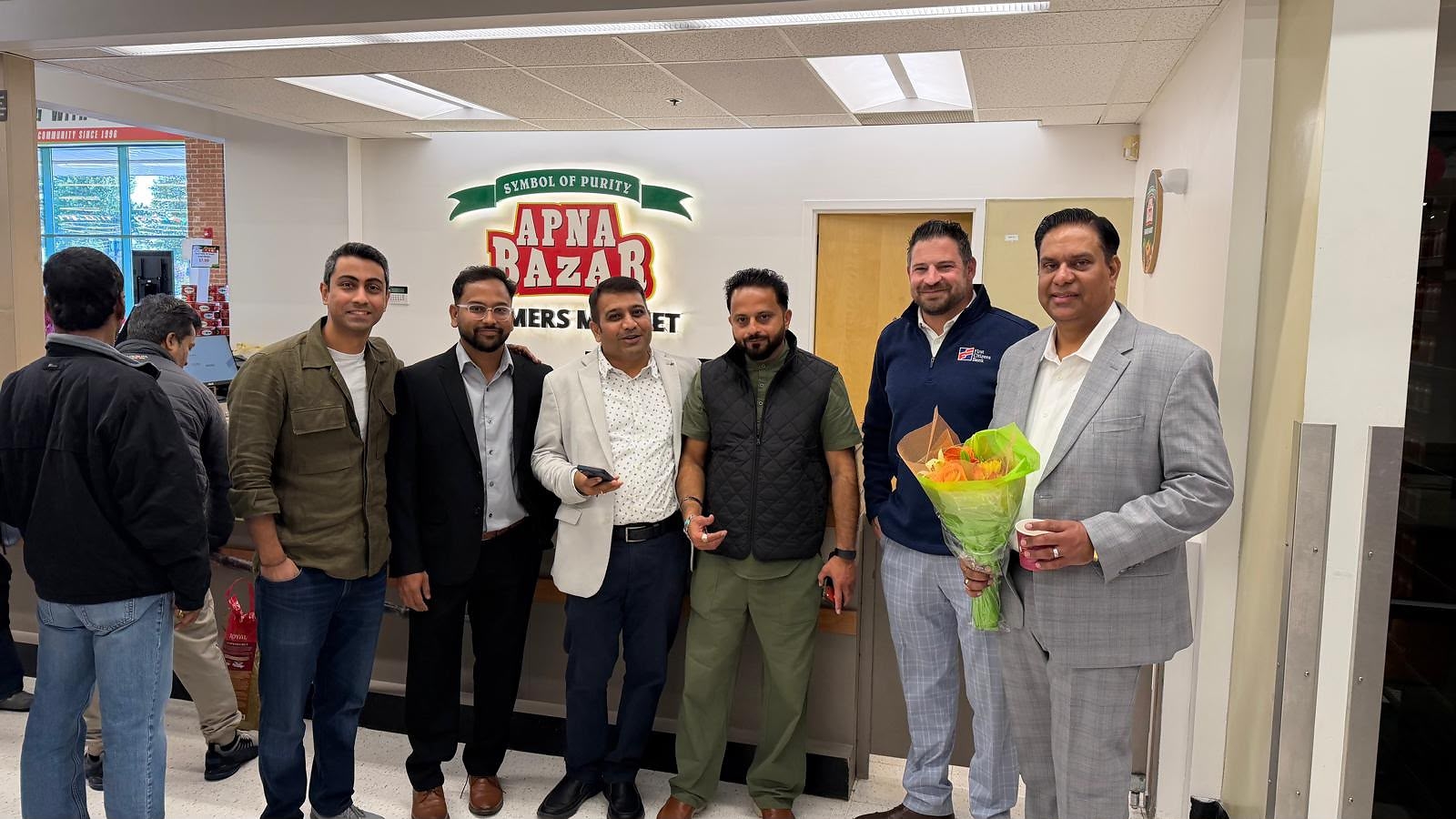
Apna Bazar, the South Asian grocery chain serving communities across the tri-state area and beyond, completed a full retail brand installation at its new Shrewsbury, Massachusetts location in 30 days — a timeline that signals how specialty grocers are rethinking vendor relationships to accelerate physical expansion.
The project was executed by Print Banners NYC, a New York-based large-format printing and installation firm, which has served as Apna Bazar's primary visual identity partner since 2007. That partnership spans the original logo design, brand identity guidelines, multi-channel marketing campaigns, and the full branding execution for the 2011 Hicksville store launch. The Shrewsbury opening is the latest chapter in what amounts to one of the more durable vendor relationships in the ethnic grocery segment.
Why the Timeline Matters
For grocery operators managing multi-site expansion, a 30-day concept-to-installation window is a meaningful benchmark. Retail branding projects of this scope — covering signage, promotional graphics, in-store environmental design, and large-format display installations — typically run six to ten weeks when a new vendor is onboarded and briefed from scratch. The compressed timeline at Shrewsbury was possible because Print Banners NYC already held Apna Bazar's brand standards, approved artwork libraries, and production workflows built over nearly two decades.
"Delivering a complete retail environment from concept to installation in 30 days required operational precision, creative synergy, and complete client trust," said Mohamad Faroqui, Founder of Print Banners NYC. That trust, he noted, was built incrementally across every prior store launch and campaign.
What Operators Should Take Away
For grocery and foodservice operators planning new-unit openings, the Apna Bazar model carries a practical lesson: the vendor you brief once and re-brief every project is costing you time and margin. Long-term printing and branding partners who maintain living brand asset libraries can compress launch schedules by weeks — a real advantage when lease commencement dates are fixed and pre-opening marketing windows are narrow.
The ethnic grocery channel is expanding steadily as demographic demand grows in secondary U.S. markets like Shrewsbury. That expansion creates recurring demand for retail-ready branding execution at speed. Vendors positioned as embedded brand custodians — rather than transactional print suppliers — are increasingly winning those multi-unit rollouts.
For operators evaluating their own vendor stack, this is also a reminder that retail brand launch planning should treat print and installation vendors as strategic partners, not commodity line items. Codifying brand standards with a single trusted provider, and maintaining updated asset libraries between projects, is the infrastructure that makes fast-turn store openings possible.
Operators scaling in the specialty and ethnic grocery segment should also consider how brand consistency across locations affects both consumer trust and buyer perception — particularly as the category attracts more regional distribution interest. Retail-ready visual identity is increasingly part of the conversation in distribution and buyer readiness evaluations.
Written by Michael Politz, Author of Guide to Restaurant Success: The Proven Process for Starting Any Restaurant Business From Scratch to Success (ISBN: 978-1-119-66896-1), Founder of Food & Beverage Magazine, the leading online magazine and resource in the industry. Designer of the Bluetooth logo and recognized in Entrepreneur Magazine's "Top 40 Under 40" for founding American Wholesale Floral, Politz is also the Co-founder of the Proof Awards and the CPG Awards and a partner in numerous consumer brands across the food and beverage sector.