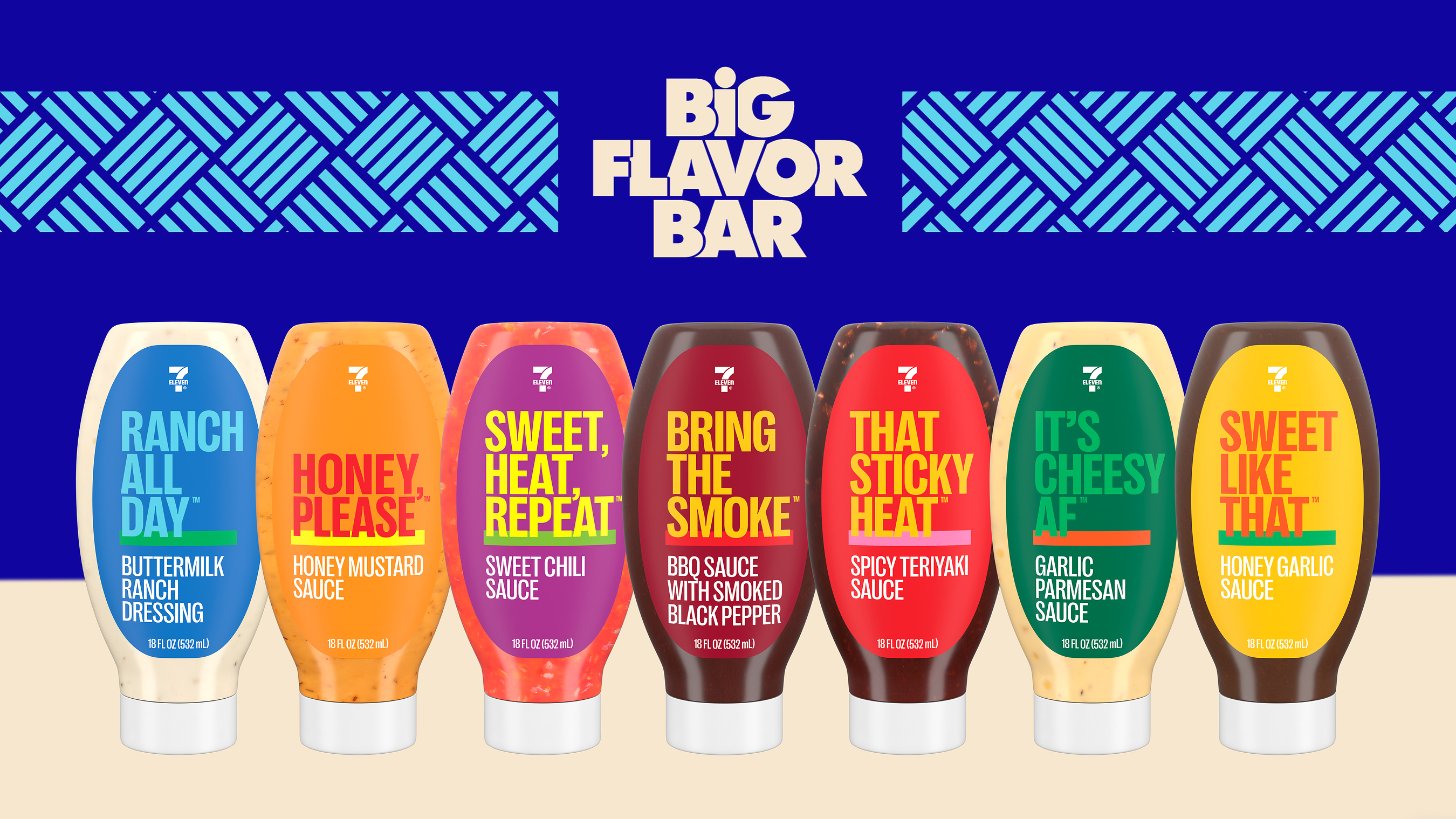
Seven proprietary sauces, a curated Secret Menu, and a $3 loyalty combo landed in 7-Eleven stores nationwide on September 3 — a structured play to move the chain's fresh-food program from commodity convenience into the flavor-forward customization lane that fast-casual operators have owned for a decade.
The BiG Flavor Bar™ is a dedicated in-store station offering crunchy garnishes, classic condiments, and seven new house-branded sauces with names engineered for social-media traction: That Sticky Heat™ (Spicy Teriyaki), It's Cheesy AF™ (Garlic Parmesan), Ranch All Day™ (Buttermilk Ranch), and four others covering honey mustard, honey garlic, sweet chili, and smoked black pepper BBQ. The station is live at participating 7-Eleven®, Speedway®, and Stripes® locations.
The Operator Signal
This is not a condiment refresh. It is a structured foodservice positioning move. By creating proprietary sauce SKUs with trademarked names and branding them at the point of use, 7-Eleven is building a flavor identity layer on top of its existing hot-foods program — the same strategic logic that drove Wingstop's flavor-count expansion and Raising Cane's sauce mystique. The Secret Menu component amplifies that: suggested builds like "Garlic Parm Loaded Tots" and a "Sweet n Spicy Roller" function as in-store merchandising and social content simultaneously, without requiring a dedicated app feature or paid media.
Brandon Brown, Senior Vice President of Fresh Foods and Beverages at 7-Eleven, Inc., framed the launch around consumer agency: the station is designed to turn customers into "flavor creators." That language is deliberate — it mirrors the customization rhetoric QSR and fast-casual brands have used to justify premium price points and drive repeat visits.
Loyalty and Procurement Implications
The demand-generation mechanic is a loyalty-gated $3 combo — sausage or hot dog, 7-Select™ chips, large Big Gulp® — available to 7Rewards® and Speedy Rewards® members through October 27, 2026. With the combined loyalty programs reporting more than 100 million members, that introductory offer is essentially a first-party data activation at scale. For operators and vendors watching c-store foodservice procurement, the sauce lineup represents a private-label manufacturing commitment — seven distinct SKUs with custom branding — which typically signals a multi-year supplier agreement and potential category expansion.
For the broader operator market, the move is worth tracking across two lenses. First, the customization station format itself — a low-capex, high-engagement physical touchpoint — is a replicable model for any high-traffic foodservice environment, from travel-plaza operators to campus dining. Second, the private-label sauce strategy reinforces what grocery and c-store buyers have been prioritizing: exclusive flavor differentiation that cannot be replicated at a competitor's condiment bar. Operators evaluating menu innovation and beverage trend strategy or working on brand launch and retail-readiness packages should note how 7-Eleven is using proprietary naming conventions to create perceived scarcity and shareability around everyday condiments.
The c-store foodservice segment has been one of the fastest-growing channels in the food and beverage industry, and plays like the BiG Flavor Bar signal that major chains are no longer content to compete on price and convenience alone — they want flavor authority.
Written by Michael Politz, Author of Guide to Restaurant Success: The Proven Process for Starting Any Restaurant Business From Scratch to Success (ISBN: 978-1-119-66896-1), Founder of Food & Beverage Magazine, the leading online magazine and resource in the industry. Designer of the Bluetooth logo and recognized in Entrepreneur Magazine's "Top 40 Under 40" for founding American Wholesale Floral, Politz is also the Co-founder of the Proof Awards and the CPG Awards and a partner in numerous consumer brands across the food and beverage sector.