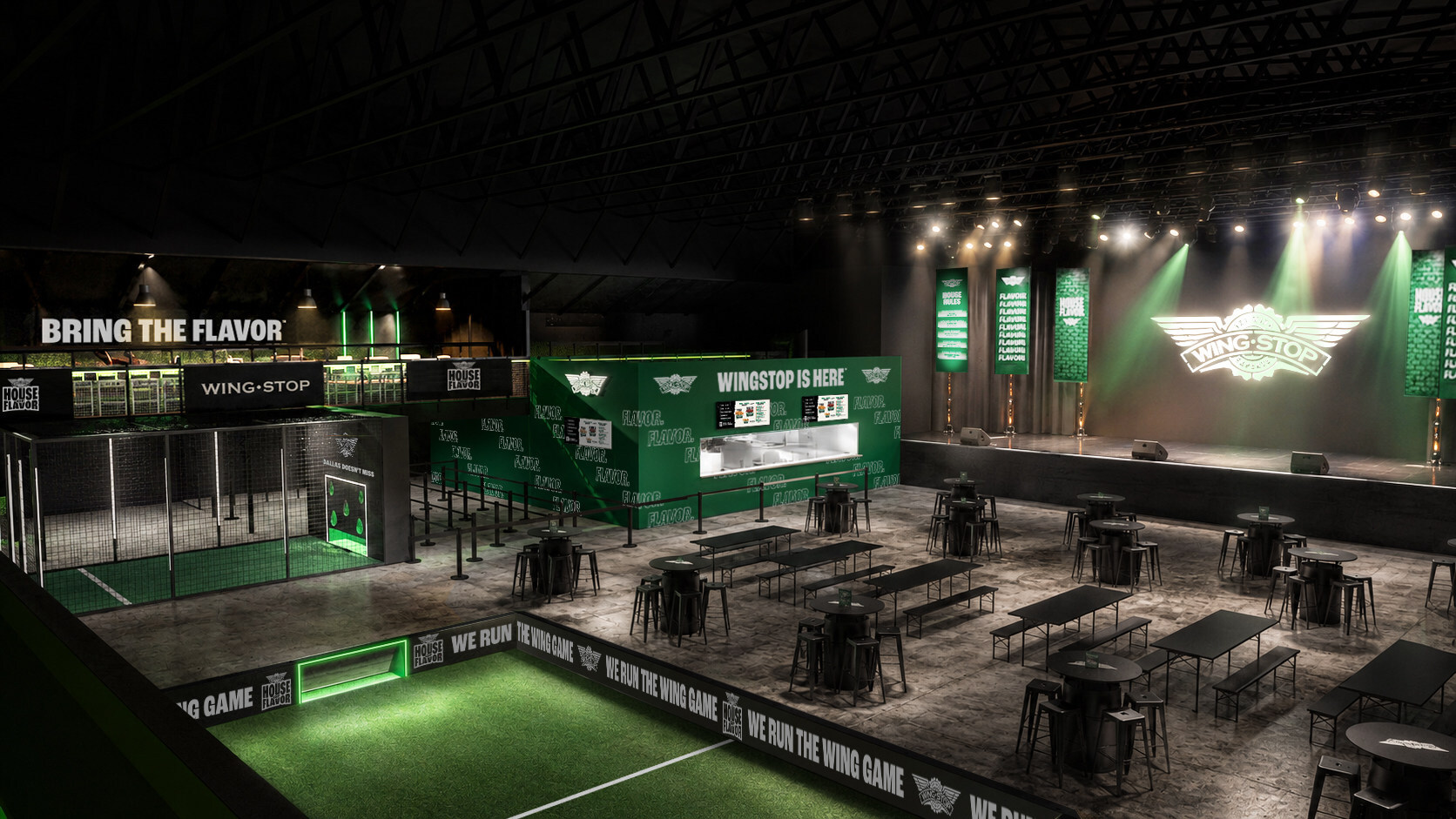
Wingstop is bringing its House of Flavor experiential concept to North American soil for the first time, staging multi-day pop-up events in Dallas (June 24–July 3) and Toronto (June 11) built around wings, live music, gameday watch parties, and exclusive performances from platinum-selling rapper FERG. For operators watching where QSR marketing dollars are flowing in 2026, this is a clear signal: experiential activation is back at scale, and it is being treated as a brand-building channel, not a line-item stunt.
The format borrows from the streetwear and sports-culture playbook — barbers, tattoo artists, custom nail art, DJ sets, and limited merch — rather than the traditional sampling-table model. That distinction matters. Wingstop is not trying to drive a trial coupon into someone's pocket; it is trying to own a cultural moment in two markets where fast-casual competition is dense and consumer attention is fractured. Dallas is its corporate backyard and brand anchor. Toronto represents a cross-border push that signals ambition beyond the sunbelt stronghold the chain has historically leaned on.
For brand and marketing teams at the regional and emerging-chain level, the intelligence here is about sequencing. Wingstop has already built a documented digital-first identity — heavy on social, influencer, and sports sponsorship — and is now layering physical experience on top of that foundation rather than substituting for it. That sequencing is deliberate. Brands that attempt experiential activation before establishing a coherent digital identity typically see lower earned-media yield from the event itself. Operators evaluating brand-launch strategy should note the order of operations: own your digital shelf, then invest in the moment that amplifies it.
The Toronto date also raises a practical procurement and logistics question for multi-unit and franchise operators: how do you execute a brand experience consistently across markets with different regulatory environments, vendor pools, and consumer cultural references? Wingstop's decision to customize activations by city — soccer-inspired cuts in Dallas, nail art in Toronto — suggests a localization layer baked into the playbook. That is expensive and operationally complex, but it is also what prevents a pop-up from reading as a copy-paste corporate exercise. Vendors pitching experiential and event services through the hospitality marketplace should be ready to demonstrate exactly this kind of market-specific flexibility.
The broader takeaway for the operator community is that culture-driven experiential marketing is becoming a standard line item for chains with the scale to execute it, which means the competitive bar for brand presence at live events is rising. Brands that have been relying entirely on programmatic and paid social to drive awareness in new markets may find that share-of-culture — not just share-of-voice — is what determines long-term loyalty in the 18-to-34 demographic Wingstop is clearly prioritizing.
Written by Michael Politz, Author of Guide to Restaurant Success: The Proven Process for Starting Any Restaurant Business From Scratch to Success (ISBN: 978-1-119-66896-1), Founder of Food & Beverage Magazine, the leading online magazine and resource in the industry. Designer of the Bluetooth logo and recognized in Entrepreneur Magazine's "Top 40 Under 40" for founding American Wholesale Floral, Politz is also the Co-founder of the Proof Awards and the CPG Awards and a partner in numerous consumer brands across the food and beverage sector.