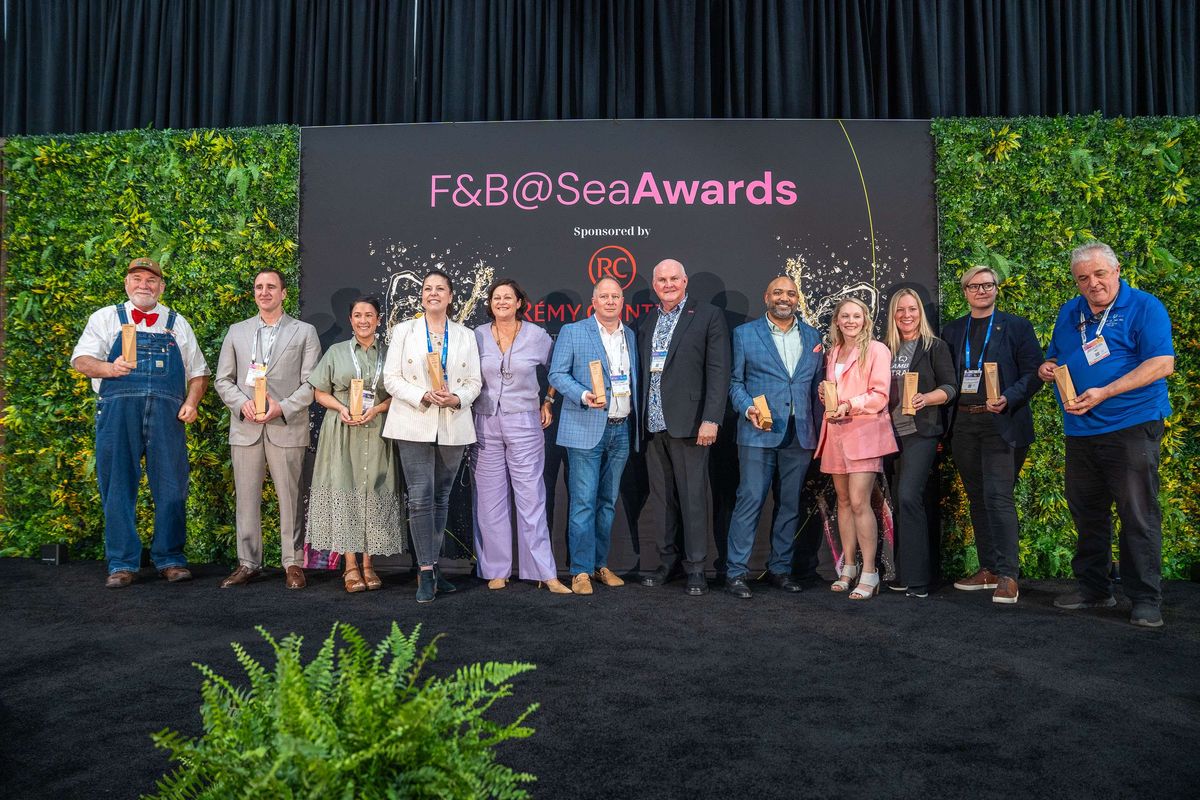
The cruise industry's food and beverage elite convened at Miami's Mana Wynwood Convention Center on April 16, and the F&B@Sea Awards—presented by Rémy Cointreau—handed out hardware to the operators and suppliers raising the bar at sea. Royal Caribbean took home two trophies, including F&B Maverick for Linken D'Souza, Senior Vice President of Global Food & Beverage, and Rising Star for Alex Palmeri, Senior Manager of Beverage Operations. Princess Cruises' Makoto Ocean claimed Best Restaurant, while The Ritz-Carlton Yacht Collection won Best Beverage Programme.
Sustainability and innovation dominated the supplier side. National Geographic-Lindblad Expeditions secured Most Sustainable F&B Programme, a signal that eco-accountability is no longer optional in cruise F&B. BZ Consortium took Beverage Innovation for its Wine of the Sea—yes, underwater-aged wine—and Aussie Select won Food Innovation with lamb charcuterie that's evidently making waves in onboard charcuterie programs. The Chef's Garden, the Ohio regenerative farm that's become a darling of high-end kitchens, earned the Eco-Pioneer Award.
Holland America Line's Marisa Christenson, AVP of Food & Beverage Operations and Development, received the Woman of Impact Award. On the tech front, The Butter Book—a training platform—won Trailblazing F&B Technology, and Nektar Natura picked up Best New Product for beverage dispensing solutions. Mary Bond, Group Director of Seatrade Cruise, noted that this year's honorees "exemplify excellence in cruise F&B" and are "redefining dining at sea." That's not hyperbole—cruise lines are now fielding culinary programs that rival land-based fine dining, complete with celebrity chefs, craft cocktail programs, and farm-to-ship sourcing.
The cruise sector's F&B arms race isn't slowing. With newer ships boasting 20-plus dining venues and beverage programs that include sommeliers and mixologists, the stakes are higher than ever. F&B@Sea returns to Miami April 7-8, 2027, and if this year's winners are any indication, expect more boundary-pushing from both operators and suppliers. The question for the rest of hospitality: when does the innovation that starts at 30,000 feet—or in this case, in the middle of the ocean—make its way back to dry land?