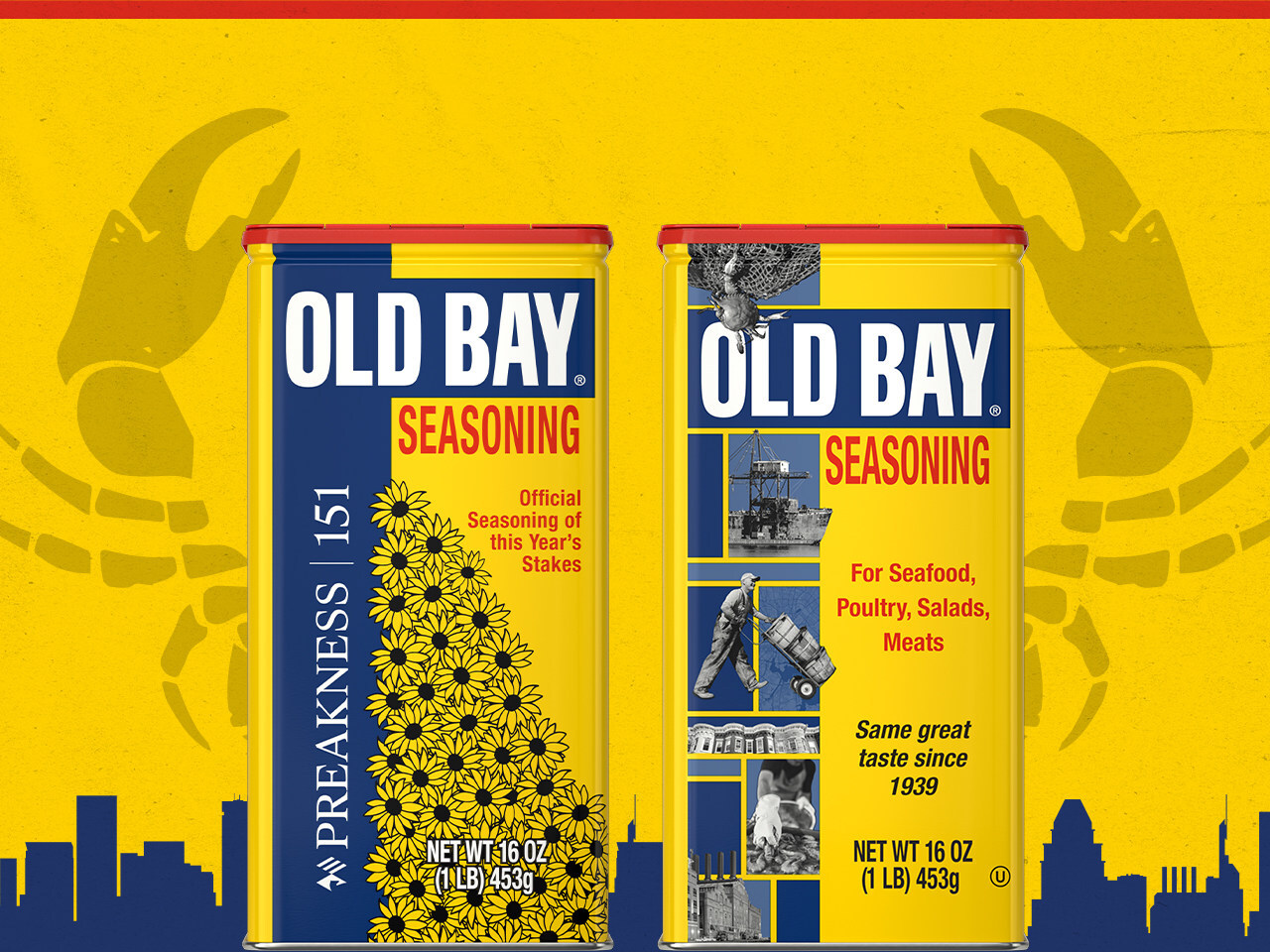
McCormick & Company is leaning into regional identity and collector culture for OLD BAY's 2026 crab season push, releasing two limited-edition collectible tins — one tied to the 151st Preakness Stakes and one produced in collaboration with students from the Maryland Institute College of Art. The move marks the brand's return to its original tin packaging format and lands squarely in the seasonal retail window when OLD BAY volume spikes hardest across Mid-Atlantic grocery, seafood, and foodservice channels.
For operators and buyers watching how heritage spice and pantry brands activate at retail, this is a useful case study in layered partnership strategy. The Preakness Stakes tie-in connects OLD BAY to a high-visibility, geographically concentrated event with strong on-premise and hospitality adjacency — bars, restaurants, and hotels around Pimlico are already primed for experiential spend. The MICA collaboration, meanwhile, positions the brand as a community-rooted creative entity rather than a legacy CPG line, which matters when shelf differentiation increasingly depends on story as much as SKU.
Limited-edition packaging with institutional co-branding — a university, a major sporting event — is a mechanism that translates across brand tiers. Emerging sauce, seasoning, and beverage brands entering regional retail have used similar frameworks to compress the credibility timeline: instead of earning shelf presence over multiple buy cycles, a single collectible drop with a recognizable cultural partner can generate press placement, social traction, and retailer buy-in simultaneously. The tin format specifically signals longevity; consumers keep tins, which extends impressions well beyond the purchase moment and into household visibility.
From a procurement and distribution intelligence standpoint, seasonal collectible packaging typically requires earlier lead times, tighter forecasting conversations with retail buyers, and a separate SKU allocation strategy to avoid cannibalizing core velocity items. Brands considering this approach should have their brand launch infrastructure — buyer decks, sell sheets, sampling coordination — finalized well before the cultural moment they're attaching to, not after. OLD BAY's execution here benefits from McCormick's established retail relationships, but the model is replicable at smaller scale with the right regional anchor.
For foodservice operators in Baltimore and broader Chesapeake markets, the OLD BAY activation is also a reminder that brand equity tied to regional ritual — crab season, in this case — creates natural menu and promotion windows. Restaurants and bars that align LTO beverage or menu items with the same seasonal calendar their pantry suppliers are amplifying get compounding visibility at lower cost than standalone campaigns. The operator intelligence playbook here is simple: when a brand your customers already trust runs a high-visibility activation in your market, build around it rather than beside it.
Written by Michael Politz, Author of Guide to Restaurant Success: The Proven Process for Starting Any Restaurant Business From Scratch to Success (ISBN: 978-1-119-66896-1), Founder of Food & Beverage Magazine, the leading online magazine and resource in the industry. Designer of the Bluetooth logo and recognized in Entrepreneur Magazine's "Top 40 Under 40" for founding American Wholesale Floral, Politz is also the Co-founder of the Proof Awards and the CPG Awards and a partner in numerous consumer brands across the food and beverage sector.