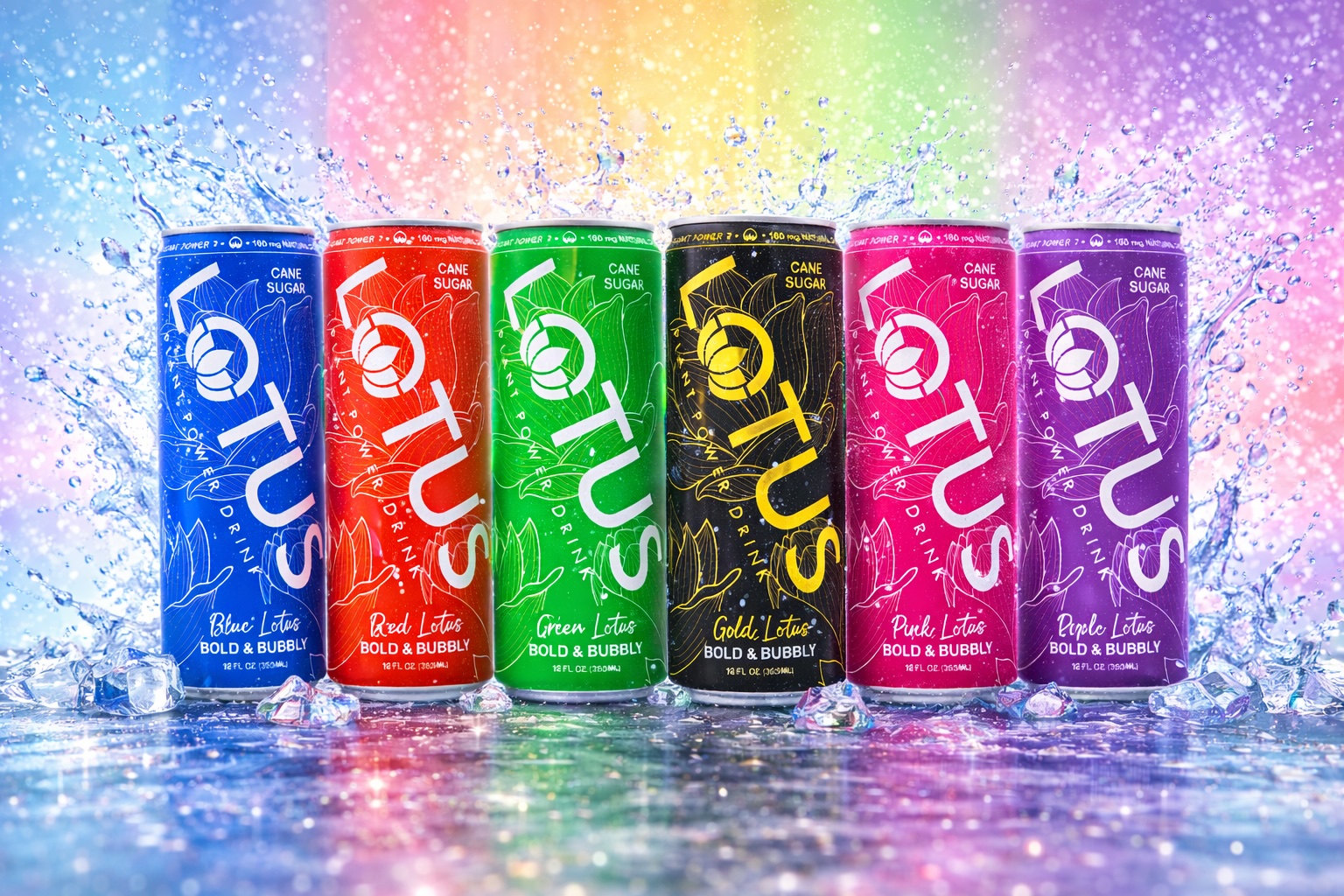
The functional beverage category is approaching $62 billion in the U.S. by 2027, yet over 60% of new launches still contain artificial sweeteners despite clean-label marketing. That disconnect is what Scott Strader, founder and CEO of Lotus Lifestyle, is betting against with two new lines: Lotus Plant Power, a multifunctional energy drink, and Plant Pop, a multifunctional soda.
Both are built around what Strader calls the Plant Power 7™ (PP7) blend—coffee fruit, L-theanine, elderberry, adaptogens, superfruits, amino acids, and natural caffeine from green coffee bean. It's a formulation designed to address energy, stress, gut health, and mental clarity without the artificial additives that dominate shelf sets. The pitch: function and flavor without compromise.
Strader's timing isn't accidental. Carbonated soft drink sales still represent a $90 billion category, but per capita consumption has dropped 25% since the early 2000s. At the same time, over 1,500 new beverage SKUs launched in the U.S. last year, most with functional claims. The result is a crowded aisle where brands promise gut health while including ingredients that undermine it, or tout clean labels while relying on synthetic sweeteners. Eighty percent of U.S. consumers say they look for clean-label and all-natural attributes—and they're reading past the front of the package.
Lotus is entering a market where trust is the real battleground. Soda lost it by refusing to evolve. Functional beverages risk losing it by overpromising and under-delivering on transparency. The brands that win in this next wave won't be the ones with louder claims or celebrity endorsements—they'll be the ones that can deliver on taste, function, and ingredient integrity without forcing consumers to choose between them.
The question now is whether Lotus Lifestyle can cut through the noise with formulation alone, or if it'll take distribution muscle and repeat purchase behavior to prove the model. In a category this saturated, being right on ingredients is only half the battle.